
OpenAI releases Symphony to automate Codex work through Linear
Engineering teams running coding agents at scale find themselves managing dozens of parallel sessions across browser tabs and command-line windows. OpenAI has released an open-source specification called Symphony that removes much of that supervision work by tying Codex agents directly to issue trackers.
Symphony is an orchestration layer that turns a project-management board such as Linear into a control plane for coding agents. Each open task is assigned a dedicated agent workspace, agents run continuously, and engineers review the output. The system polls the task board, picks up new work, and restarts agents that crash or stall.
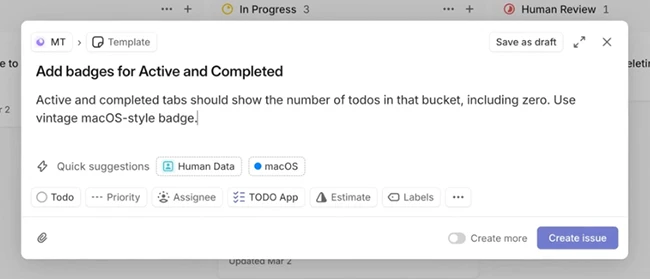
Turning an issue tracker into an agent orchestrator (Source: OpenAI)
How the system operates
Symphony decouples work from sessions and from pull requests. Some Linear issues produce multiple pull requests across repositories, and others involve investigation or analysis that never touches the codebase. Ticket statuses act as a state machine that drives the orchestrator’s behavior.
The system runs on devboxes and operates around the clock, so engineers can add tasks from any location and expect an agent to begin work. One OpenAI engineer made three significant code changes from the Linear mobile app while staying in a cabin with weak Wi-Fi, according to the company.
Symphony is built on the Codex App Server. To keep the Linear access token away from subagents, OpenAI uses dynamic tool calls that expose a raw linear_graphql function for executing arbitrary requests against Linear, avoiding both MCP and direct token exposure to containers.
Output gains and adoption signals
Some teams at OpenAI saw a 500% increase in landed pull requests during the first three weeks of using Symphony. Linear founder Karri Saarinen highlighted a spike in workspaces created on the platform as Symphony was released.
OpenAI describes a deeper effect on engineering work: with engineers no longer supervising individual Codex sessions, the perceived cost of each code change drops because human effort is no longer driving the implementation itself. Teams move from managing coding agents to managing the work that needs to get done.
A reference implementation
Symphony is positioned as an intentionally minimal orchestration layer. OpenAI has open-sourced it to demonstrate what Codex App Server can do when paired with workflow tools like Linear. The company does not plan to maintain Symphony as a standalone product, treating it as a reference implementation that other teams can study, fork, or rebuild.
OpenAI suggests pointing a coding agent at the Symphony specification and repository to generate a tailored version. The approach mirrors the pattern many developers already follow with OpenAI’s earlier “harness engineering” guidance, in which teams use coding agents to scaffold their own repositories based on a public spec.
Prerequisites for teams adopting it
Symphony works best in codebases that have already adopted harness engineering practices, including agent-friendly repository structures, automated tests, and guardrails that allow Codex to operate with limited supervision. OpenAI built those foundations before deploying Symphony internally, redesigning its engineering workflow and treating Codex as a member of the team.
Symphony is available for free on GitHub.
