
Rabbit’s new OS lives in the cloud and borrows your laptop to get things done
Rabbit, the Santa Monica company that makes the r1 handheld, released OS3, an agentic operating system. It runs in Rabbit’s cloud and operates a user’s computers through a local agent that installs with one command. The user states a goal in a chat, and OS3 picks the device, then works desktop software, local files and web pages, or writes and runs code, to complete the task.
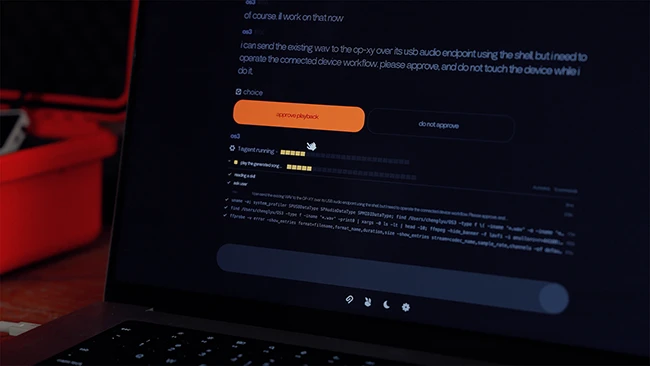
One account can connect up to five devices, including Windows, Mac and Linux PCs, cloud virtual machines, dedicated AI computers and the r1. Anyone who installs the agent gives software that takes orders from a chat window direct control of that machine, and the content each task needs passes through Rabbit’s servers on its way to an AI model.
What leaves the machine
Rabbit says the local agent does not copy, store, use or sell a user’s files, which stay on the computer. Conversations with OS3, and the memory it builds from them, sit on Rabbit’s servers. When a task runs, Rabbit’s servers process the relevant content and prompts, then pass them to the model provider the user picked, which handles the data under its own terms. Rabbit says it keeps no copy of what it relays.
A request to summarize a contract on your laptop still puts that contract’s text in front of two companies.
Confirmation for sensitive actions
Rabbit says OS3 acts on user instructions and does not start tasks on its own. Sensitive actions require the user’s confirmation, the host operating system requests system-level permissions locally, and users can revoke permission at any time. Rabbit did not list which actions count as sensitive.
OS3 also accepts skills, packaged instructions and tools that extend what an agent can do, from anywhere they are published, by Rabbit’s account. A user pastes a skill’s URL into the chat and OS3 sets it up, with no command line step or extra configuration file. That convenience also skips the point where a user might read what they are adding to an agent that controls their computer.
Bring your own model
Users supply API keys from frontier AI labs, cloud router platforms or locally hosted models, and can switch models without losing context, memory or skills. Jesse Lyu, Rabbit’s founder and CEO, said the company spent two and a half years building toward “a system you don’t operate, but instead just tell it the outcome.”
Available now
OS3 is live at os3.rabbit.tech, where new users sign up from a desktop browser and finish onboarding in one conversation. After setup, they can reach it through the web portal on desktop or mobile, Telegram, iMessage, RCS or SMS, or the r1. Rabbit’s upcoming cyberdeck, a machine built for vibe coding, will ship with OS3 as its default operating system.
OS3 follows twelve consecutive months of updates Rabbit shipped for its devices, including rabbitOS 2, a terminal mode and bring-your-own-key support for DLAM, the company’s computer-control technology.

Download: The Agentic Software Development Guide
