
Flipper Zero firmware development gets a fresh set of community rules
Owners of the Flipper Zero, the pocket-sized wireless testing tool, spent recent weeks worried that its official firmware had gone quiet. Pavel Zhovner, CEO of Flipper Devices, moved to settle that concern with word that the company has set aside staff to keep the firmware maintained and to support outside contributions. The work will run under a fresh set of rules covering feature requests, code submissions, and testing.
How the quiet period began
The firmware reached a settled state in 2024. That release, stable firmware 1.0, arrived after the launch of the Apps Catalog and gave app developers a stabilized API and SDK. Developers could build against it without rebuilding their apps every month to keep up with API changes. Once the core was steady, Flipper Devices narrowed its firmware work to infrastructure upkeep and critical bug fixes, and turned its attention to new hardware.
A design limit drove much of that architecture. The device carries only 700 KB of flash memory for firmware, and the team hit that ceiling early. Their answer was dynamic app loading from the microSD card, which moved device functions, including core features, out of the firmware and into separate apps. That approach became the base of the 1.0 release.
What changed the plan
Community reaction pushed the company to revisit its stance.
“It’s genuinely moving that this project and everything we’ve built together matters to you. That’s why we’re ready to revisit some of our past decisions. We decided to allocate resources to continue supporting community contributions, but with a new approach,” Zhovner wrote.
Async contact through GitHub
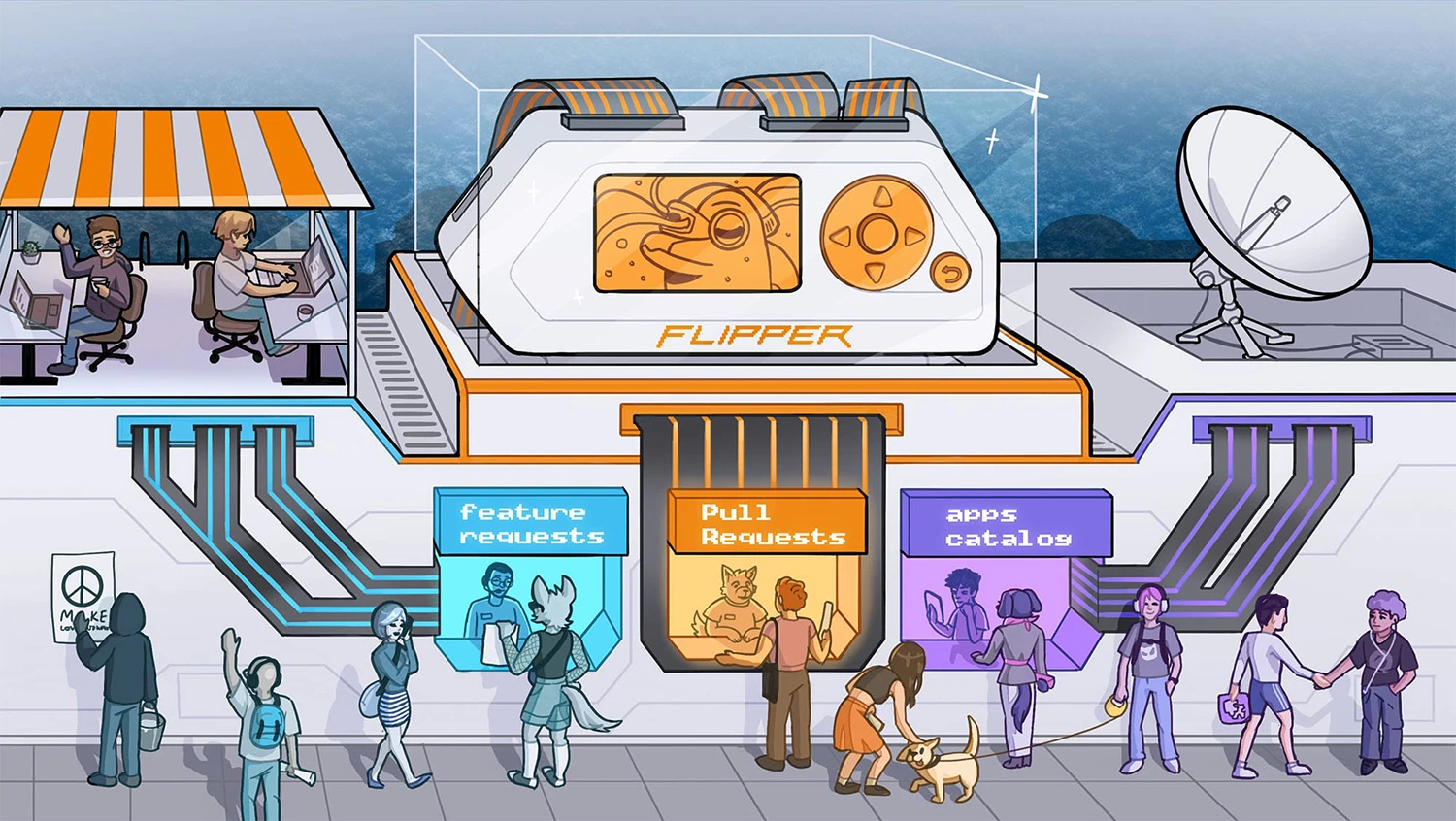
Communication with the development team now runs through GitHub Discussions. Users can post concrete feature requests, formatted to a set template, and vote on the ones they want built. The team has committed to reviewing the requests that gather the most votes on a weekly cycle. Abstract questions, general talk, and help requests move to Discord, Reddit, and social media.
The company disabled direct messages on its social accounts some time ago, once the user base crossed one million. The number of incoming requests had made real-time contact unworkable, and niche asks blended into broad demand with no way to sort one from another. Voting gives the team a signal about what a wider group of users wants prioritized.
Tighter code review
Pull request review gets stricter under an updated contribution guide. Extra scrutiny goes to AI-generated code that touches low-level libraries and proves hard to verify, and to changes that alter the device interface and call for documentation edits. The QA team’s integration test cases are now public, and every firmware change will need to pass them. Flipper Devices plans to bring community members into part of the regression testing.
Submissions to the Apps Catalog continue under the existing process.

Must read:
- 25 open-source cybersecurity tools that don’t care about your budget
- GitHub CISO on security strategy and collaborating with the open-source community
