
Researchers develop tool to expose GPS signal spoofing in transit networks
The Oak Ridge National Laboratory (ORNL) has developed a portable detector that identifies GPS spoofing in real time, including during motion, to help protect transportation systems.
Spoofing involves transmitting counterfeit signals that imitate authentic GPS transmissions and produce false information about location, time, or both. GPS jamming, another form of interference, overwhelms receivers with noise and blocks legitimate satellite signals.
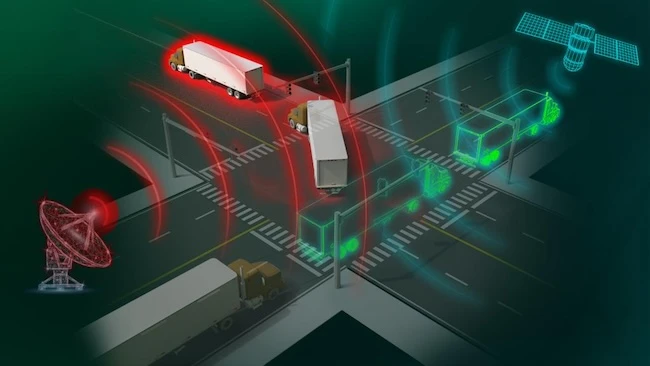
GPS spoofing overrides real satellite signals to trick a vehicle’s positioning software into following the wrong path, or it misleads a tracking system into showing cargo in a different place from its real location. (Credit: Andrew Sproles/ORNL, U.S. Dept. of Energy)
The ORNL team combined expertise in sensing, radio frequency signals, mathematics, computing, electronics, and national security to create a highly sensitive detector designed to expose manipulation of GPS signals.
“Trucking needs a solution that works without special conditions or dependence on a trusted reference source,” Austin Albright, The ORNL research team lead, explained.
The ORNL detector identifies GPS spoofing affecting location and time in real time, including during motion. It works when attackers manipulate all or part of the satellite signal set and can distinguish spoofed signals from authentic ones even when their strength is the same.
GPS spoofing risks in transportation
Criminal cases and independent tracking efforts revealed the growing problem and led ORNL researchers to study GPS jamming.
“Everyone uses cargo monitoring with GPS tracking, whether for your personal packages, your pizza, or nuclear materials,” Albright said. “If GPS gets jammed, that delivery disappears, and you don’t know where to respond, but at least you know something is wrong. Spoofing is scarier because everything still appears to move as you expect, so you think everything is safe and sound when it’s not.”
Cargo theft can affect prices and jobs. The greater concern is the diversion of dangerous or critical items such as pharmaceuticals, radioactive materials, or weapons from intended recipients.
Albright is raising awareness of these risks through outreach to transportation security organizations. He is also planning research to identify and characterize the baseline level of threat to the trucking industry from GPS spoofing.
Albright and the Oak Ridge National Laboratory team will continue efforts to detect and prevent GPS deception, strengthening transportation security across the United States.
