Infected TV boxes in BADBOX 3.0 rent out their owners’ home internet
HUMAN’s Satori Threat Intelligence and Research Team has disrupted BADBOX 3.0, an operation run mainly from infected low-cost TV boxes that generated roughly 40 billion ad bid requests a day at its peak. That was more than 4% of all connected TV (CTV) traffic HUMAN observed and more than three times the volume of VASTFLUX, the previous record holder.
The boxes play video ads in a window the owner never sees, and the requests claim to come from well-known streaming apps that do not run on the device.
The same boxes also rent out the owner’s home internet connection to residential proxy networks, which threat actors use to make attacks look like household traffic. Advertisers may pay for ads that no one watches, and the people guarding accounts and payments may see takeover or carding attempts arriving from what looks like a living room.
BADBOX, found in 2023, was a firmware backdoor on uncertified devices, and HUMAN observed more than 74,000 of them. BADBOX 2.0, in 2025, spanned more than 10 million devices in 222 countries and territories. The 3.0 operators reuse pieces of both, including a proxy network first exposed in 2.0.
A catalog hosted in the open
Infected devices contact a command-and-control server, which returns a list of fraud modules and where to download them. The modules sit on public code repositories, with backups on a second code platform, an operator-controlled file server and, for some, a CDN mirror. The operators also run their own GitHub proxy, so blocking the repositories at the network level does not stop the downloads.
One month of CDN statistics for a single repository showed 367,023 requests and about 482.7 GB served. Those are requests, not unique devices, and cover one repository and one of four delivery routes, so Satori presumes actual infections are significantly higher. Antivirus coverage of the newer modules was effectively absent at the time of analysis.
Ads that look like premium inventory
The ad modules mimic legitimate video ad software and render the ads in a hidden window. To a buyer, the request looks like a well-known app, a residential IP address and a full video ad. The apps sending the requests have no business relationship with the apps they claim to be and do not appear in those apps’ sellers.json or app-ads.txt files, where such files exist.
The traffic still has tells. For one abused app identity, about 40% of requests overall and 80% of US requests came from residential proxy exits. A small set of cheap, uncertified Android device models sent nearly all requests to one family of apps, while ordinary CTV devices spread theirs across many.
Eleven proxy networks
Other modules enroll devices in eleven residential proxy networks: ten commercial services and PXYEDGE, which Satori assesses to be IpMoYu, the network exposed in BADBOX 2.0, under a new name. The PXYEDGE domain was registered March 15, 2026, and reports about 200,000 nodes. The owner pays for the bandwidth while someone else sells access to the address.
A Chinese manufacturer is linked
Satori ties the catalog to TXCZ, a Chinese electronics manufacturer. Modules check for TXCZ-specific build properties before running, and a TXCZ launcher with system-level permissions comes preinstalled on its devices.
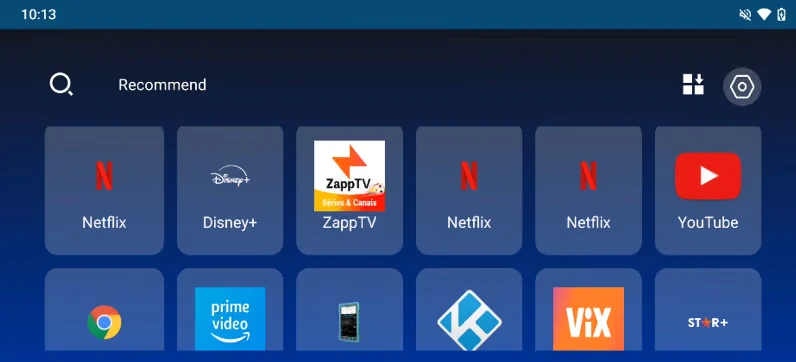
The interface of a TXCZ CTV device (Source: HUMAN)
“The practical guidance for end-users remains the same as in earlier BADBOX-family investigations: choose devices from familiar brands, check whether a device is Play Protect certified, download applications only from official marketplaces, and treat a device that behaves strangely as a device worth retiring,” the researchers noted.