
FBI: $388 million lost in crypto ATM scams in 2026
Americans lost more than $388 million to crypto kiosk scams in 2025, with the FBI warning that criminals are increasingly directing victims to transfer funds through these machines.
Cryptocurrency kiosks, popularly known as Bitcoin ATMs, are physical automated teller machines that allow users to buy cryptocurrencies with cash or card, and some also let users sell digital assets for cash. Like regular ATMs, they are commonly located in public places with high foot traffic.
“In typical [Internet Crime Complaint Center] complaints involving cryptocurrency kiosks, criminals give detailed instructions to individuals, including how to withdraw cash from their bank, how to locate a kiosk, and how to deposit and send funds using the kiosk,” the FBI said.
In 2025, IC3 received more than 13,400 complaints tied to these machines, with losses exceeding $388 million. More than half involved individuals over 50, who reported losses exceeding $302 million.
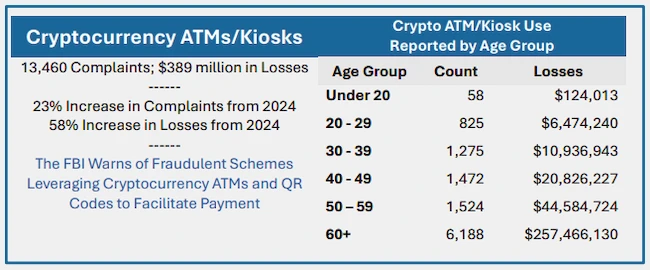
Cryptocurrency fraud trends (Source: FBI)
The IC3 received a total of 1,008,597 complaints in 2025, and the FBI says that cyber-enabled fraud complaints resulted in losses exceeding $17.7 billion.
Crypto ATMs bans
Over the years, regulations for Bitcoin ATM operators have become stricter, introducing new compliance requirements and transaction limits.
More recently, the machines have been banned in Indiana, Tennessee, and Minnesota.
Bitcoin Depot, one of the largest US crypto ATM operators, announced on Monday that it has filed for Chapter 11 bankruptcy protection “to effect an orderly wind-down of the Company’s operations and facilitate a sale of its assets.”
They cited the aforementioned regulatory limitations and state-wide bans for making the company’s business model unsustainable.
Advice for users
The FBI advises users not to send money to individuals they only know through online interactions, or follow instructions from unknown parties to scan QR codes or transfer funds through cryptocurrency kiosks.
Requests for cryptocurrency payments from individuals claiming to represent companies, government agencies, law enforcement, legal offices, or utility providers should be verified directly with the organization through official contact channels.
“No legitimate law enforcement or government official will call to demand payment via a cryptocurrency kiosk,” the FBI warned.
People using cryptocurrency kiosks should pay attention to fraud warnings displayed by the kiosk or warning from kiosk operators, and stop or cancel a transaction if they see/receive it.
