Hottest cybersecurity open-source tools of the month: May 2026
Presented here is a curated selection of noteworthy open-source cybersecurity solutions that have drawn recognition for their ability to enhance security postures across diverse settings.

Pipelock: Open-source AI agent firewall
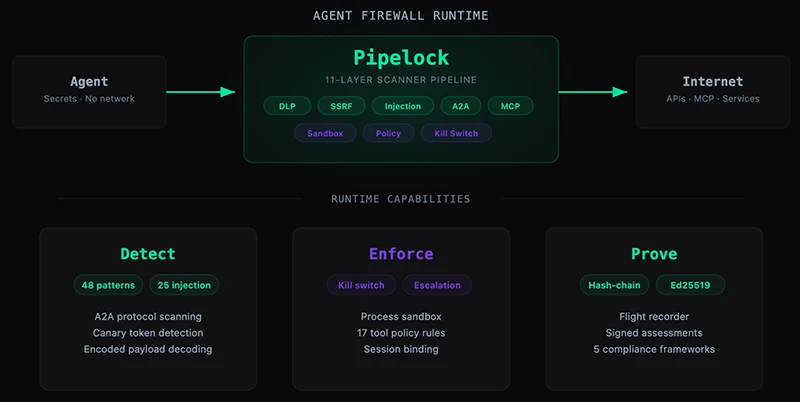
AI coding agents run with shell access, environment variables containing API keys, and unrestricted internet connectivity, creating a single point of failure where one compromised tool call can leak credentials to an attacker-controlled domain.
Pipelock, an open-source security harness developed by Joshua Waldrep under the PipeLab project, addresses this exposure by inserting an enforcement layer between agents and the network. Version 2.3.0 shipped with class-preserving request redaction and generic SSE streaming response scanning.
AIMap: Open-source tool finds and tests exposed AI endpoints
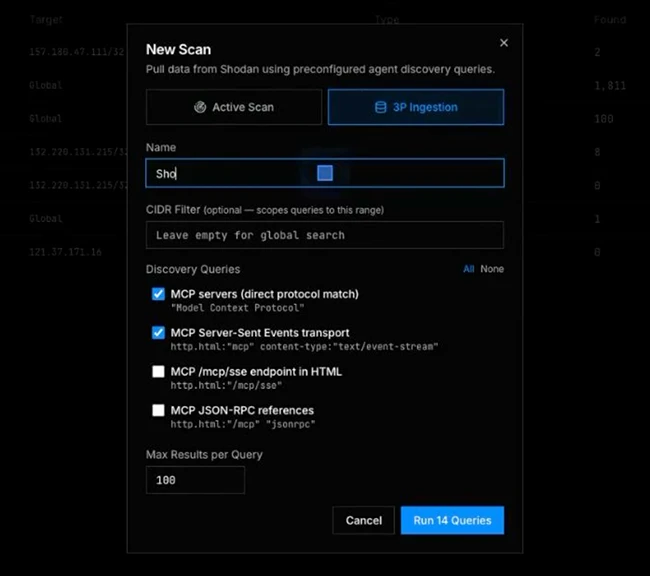
Public-facing Ollama servers, MCP endpoints, and inference proxies have multiplied across the internet over the past year, often deployed without authentication or rate limits. AIMap is an open-source platform that finds these systems at internet scale, fingerprints them, scores their exposure, and runs protocol-specific attack tests against authorized targets.
Rustinel: Open-source endpoint detection for Windows and Linux
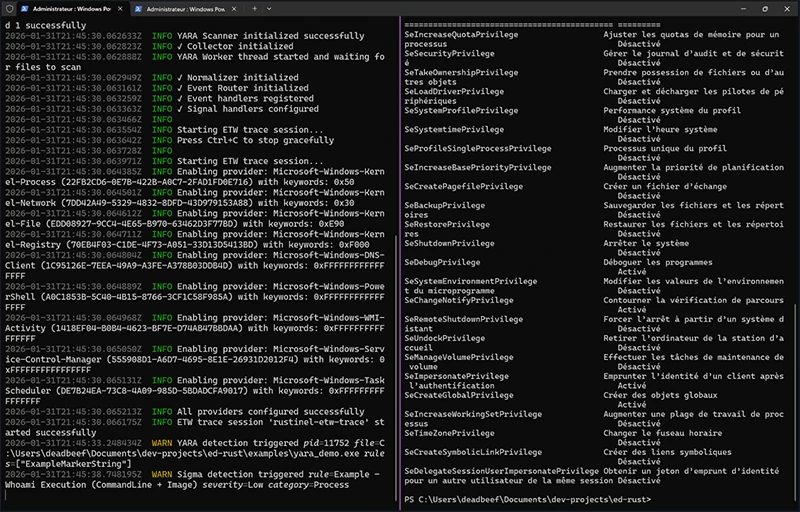
Open-source endpoint detection has long been split between Windows-focused tools built around Sysmon and Linux tools built around eBPF or auditd. Defenders running mixed environments have had to stitch together separate pipelines, separate rule sets, and separate maintenance burdens. Rustinel, a Rust-based endpoint agent, is an attempt to collapse that work into a single codebase.
Sandyaa: Open-source autonomous security bug hunter
Source code auditing has traditionally relied on static analyzers that flag long lists of potential issues, leaving engineers to sort bugs from noise. A new open-source project from offensive-security firm SecureLayer7 takes a different route, using LLMs to read a codebase, trace how data moves through it, and produce working exploit code for the vulnerabilities it confirms. Their open-source tool, called Sandyaa, was released under an MIT license.
Lyrie: Open-source autonomous pentesting agent
Penetration testing has usually required weeks of manual work, specialized tooling, and teams with narrow skill sets. Lyrie, an open-source autonomous security agent built by OTT Cybersecurity, compresses that process into a command line tool and publishes the entire codebase.
CVE Lite CLI: Open-source dependency vulnerability scanner
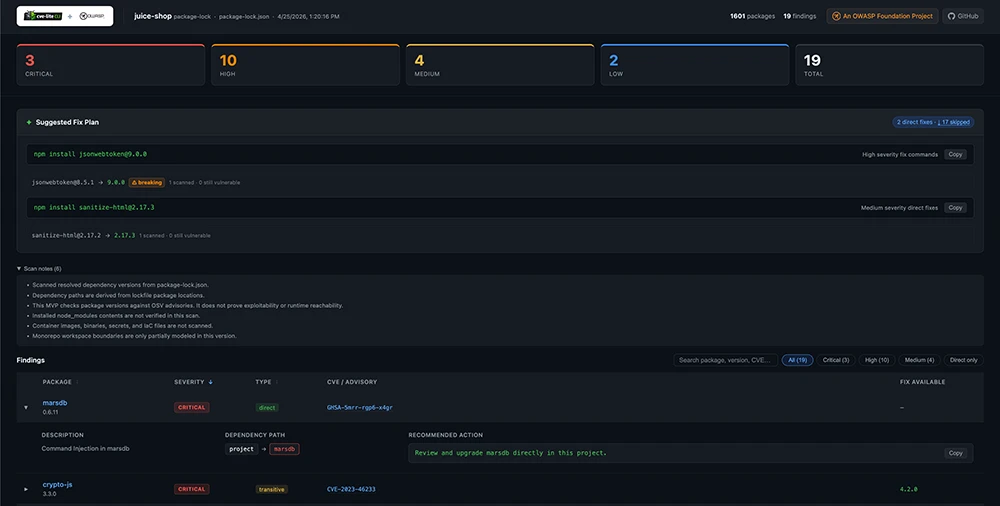
Dependency vulnerability scanning in JavaScript and TypeScript projects has long sat at the end of the development pipeline. Pull requests get opened, continuous integration runs, and a security scanner returns a list of CVE identifiers that developers then have to triage hours or days after writing the code. CVE Lite CLI, now an officially recognized OWASP Incubator Project, moves that check to the developer’s terminal.
The open-source tool, maintained by Sonu Kapoor, reads a project’s lockfile, queries the Open Source Vulnerabilities database, and returns copy-and-run fix commands scoped to the relevant package manager. It supports npm, pnpm, Yarn, and Bun.
OpenHack: Open-source AI-powered vulnerability research

Source-guided vulnerability research increasingly leans on coding harnesses such as Claude Code, Codex, and Cursor to drive agent-based reviews of application code. A new MIT-licensed project from the Dutch security firm Hadrian, called OpenHack, packages that approach into a file-based workspace that any of those harnesses can run.
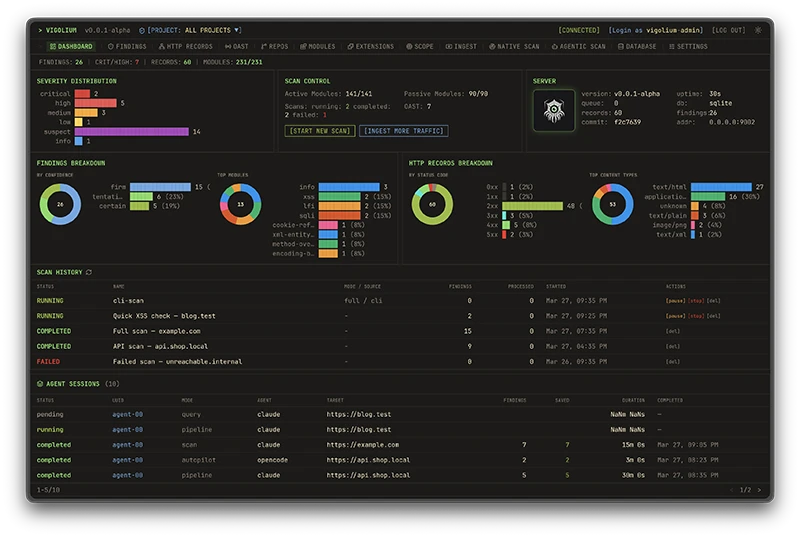
Vigolium: Open-source vulnerability scanner
Vigolium, an open-source vulnerability scanner that combines deterministic scanning with AI-driven auditing, launched its initial open-source release this month. The project ships 235+ scanner modules and an in-process agent runtime called olium that handles autonomous endpoint discovery, attack planning, and finding triage.