
IDnow launches Trust Platform to help regulated firms move from KYC to continuous trust
IDnow has announced the launch of the IDnow Trust Platform, designed to help regulated organisations orchestrate identity verification, fraud prevention, biometric authentication, and qualified digital trust services throughout the customer lifecycle.
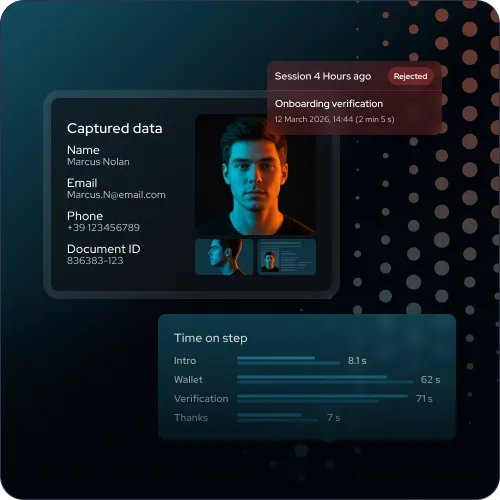
“The identity industry is entering its biggest transformation since onboarding first went digital,” said Andreas Bodczek, CEO of IDnow. “For years, organisations treated identity verification as a one-time event at the start of a customer relationship. That model is no longer sufficient. We are moving from a world centred on one-time verification to one centred on continuous trust.”
Several developments are driving this shift. AMLR will introduce a harmonised anti-money laundering framework across the European Union from July 2027, while regulated businesses will be required to accept EU Digital Identity Wallets from November 2027. Advances in generative AI are making identity-related fraud more sophisticated and easier to scale. Consumers increasingly expect digital onboarding and authentication processes to be fast, seamless and secure.
Historically, identity verification focused primarily on onboarding. Today, organisations need to establish and maintain trust long after the initial verification has taken place.
From KYC to TYC
The IDnow Trust Platform is designed to move businesses beyond Know Your Customer (KYC) to Trust Your Customer (TYC). Through four modular services, Identify, Authenticate, Protect and Trust, the platform delivers continuous, evidence-based trust across the full customer lifecycle.
Its Orchestrate, Observe and Decide capabilities enable organisations to configure workflows, monitor risk signals in real time and automate decisions without involving the engineering team when regulation shifts or fraud patterns change.
IDnow is at the forefront of Europe’s EUDI Wallet rollout, already operational in key markets and ready to accept wallet presentations from citizens across all 27 Member States ahead of the November 2027 mandate. But while the arrival of EU Digital Identity Wallets marks a landmark moment for European digital identity, it is often misread as a simplification of compliance. It isn’t. Wallets represent one powerful new input into an increasingly complex compliance picture, not a replacement for everything that came before.
Organisations will simultaneously need to accept and integrate multiple wallet standards and eID schemes, each evolving under a shifting regulatory framework, while continuing to strengthen classical document-based identity verification for the significant proportion of users and scenarios wallets do not yet cover. The result is not a simpler onboarding landscape. It is a considerably more complex one.
This is the problem the IDnow Trust Platform is built to solve. Rather than forcing organisations to manage this complexity themselves, across multiple vendors, integration layers and constantly changing regulatory requirements, the Trust Platform abstracts it into a single, orchestrated infrastructure.
IDnow has secured the certificates required to accept wallet presentations across key markets, including the German Berechtigungszertifikat, and combines wallet capabilities with in-house Qualified Trust Services and Qualified Electronic Attestations of Attributes (QEAA) to address the gaps that wallet identity data alone cannot fill.
Organisations using the IDnow Trust Platform can navigate this complexity without it becoming a barrier to growth, staying compliant, preventing fraud, and continuing to serve customers efficiently as the regulatory landscape evolves beneath them.
“The wallet gets you through the door, the IDnow Trust Platform gets you through compliance,” said Jonas Mendes, Director of Product at IDnow. “For years, organisations could build an onboarding process and leave it largely unchanged. That is no longer the world we live in. Fraud evolves faster, regulations evolve faster and new identity methods are emerging. The real challenge is being able to adapt without needing your development teams to adjust customer journeys every time something changes.”