
Shame and sleepless nights haunt scam victims long after the money is gone
Scams and identity theft hurt people in different ways, and recovering involves much more than getting money back, according to ITRC’s 2026 Consumer Impact Report. Scam victims often struggle with shame and self-blame, while identity theft victims can spend weeks of personal effort trying to repair the damage.
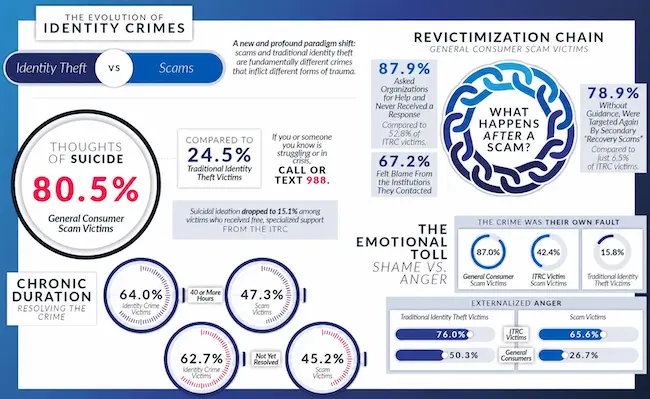
Source: ITRC
Conducted in August and September 2026, the research surveyed 1,111 U.S. adults and a separate group of 197 victims who had contacted the ITRC for assistance during the previous year.
“Scams act as an acute trauma, while traditional identity theft acts as a chronic burden. Support for victims is as crucial now as it has ever been. Behind these numbers are real people enduring devastating trauma and shame. Lawmakers, companies and technology leaders cannot treat this as business as usual,” said Eva Velasquez, CEO of the ITRC.
Emotional effects of scams and identity theft
Scams involve criminals manipulating someone into sending money or sharing personal information. Identity theft involves stealing personal information, which criminals may then misuse. The two can overlap when information obtained through a scam is later used to access accounts or commit fraud.
Of the surveyed scam victims who contacted the ITRC for help, 54.8% reported feeling ashamed or embarrassed. Respondents also described feeling that the incident was partly their fault.
The emotional toll extended to sleep. Victims in both the scam and identity theft groups reported trouble falling or staying asleep.
Recovery adds to the burden
Financial losses reached working-age adults, including people in higher-income households. Some scam victims in the general consumer group reported losing at least $100,000 that they had not recovered.
Getting help proved difficult. In that group, 87.9% of scam victims said they had asked an organization for assistance and received no response. Many said the organizations they contacted made them feel the incident was their fault.
The search for help also exposed victims to further fraud. In the same group, 78.9% paid a fee to a third party promising to recover stolen money, fix their credit or catch the scammer. The ITRC identified these services as recovery scams.
“The many people on the other end of the phone from various government entities really did not care about me and many gave the impression that I was the guilty party. There has been no resolution to my problem after 6 months,” said one victim who contacted the ITRC.
Criminals use stolen personal information to obtain credit, make unauthorized card charges, open bank accounts or misuse medical or employment records. Victims can become caught in a bureaucratic maze as they try to clear their names and regain control of their accounts.
Of identity theft victims who contacted the ITRC, 64% spent more than 40 hours trying to resolve the crime. Most said their cases remained unresolved at the time of the survey. Some had discovered the crime more than a year after it occurred.
The damage also reached victims’ working lives. Scam victims in the general consumer group reported losing jobs because of the crime, missing out on job or promotion opportunities and strained relationships with supervisors.
Recognizing and avoiding scams
In the general consumer group, 91% of respondents described themselves as knowledgeable about protecting their personal information. Nearly half said they had come close to sharing information or sending money in a scam during the previous 12 months before stopping in time. More than a quarter reported multiple close calls.
Respondents who avoided scams cited sensing something was wrong, recognizing a tactic from consumer education and receiving a warning from a bank or payment app.
