
Wearable tech adoption continues as privacy worries grow
Over 1 billion users wear devices for tracking steps, sleep, heart rate, and other personal metrics. These devices collect a continuous stream of sensitive data, often tied to detailed user profiles and companion apps. New Clutch survey data show that as wearables settle into daily life, questions about how that data is handled are influencing user confidence and purchasing decisions.
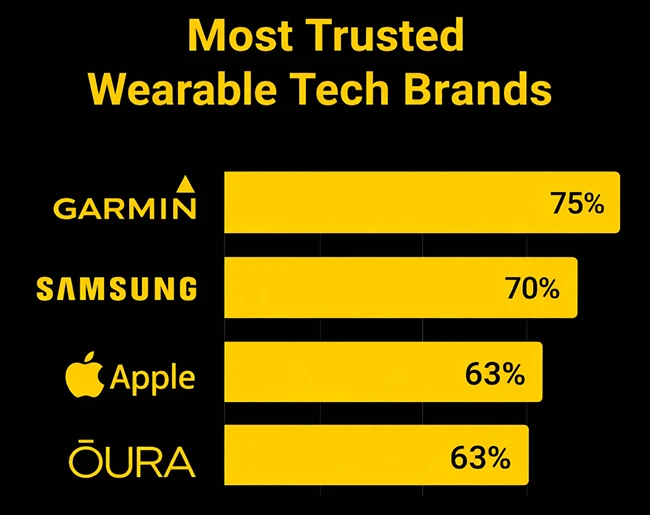
Privacy concerns influence loyalty
Survey results highlight an increase in consumer concern around data security and data privacy. 74 percent of respondents said they are concerned about how their wearable devices handle their personal data. Only 58 percent of respondents expressed confidence that their wearable protects their data, and that confidence varied by gender and device brand. For example, a larger share of Garmin users reported confidence in data protection compared to users of other brands. 
These concerns are affecting consumer behavior. Most respondents said they would consider switching wearable brands if they had concerns about data privacy. Expectations around data handling are playing a direct role in which products people choose to buy and continue using.
Accuracy and device features remain important
Alongside privacy, users care about how accurately wearable devices measure health data. In the survey, accuracy was the factor most often cited as the thing users value most in wearable technology, with battery life and device design following behind.
The emphasis on accuracy and data quality may also intersect with privacy perceptions. Health and fitness trackers collect sensitive and detailed personal information on metrics such as heart rate, activity levels, sleep patterns, and other bodily functions. Other industry research has documented that this type of continuous sensor monitoring raises specific privacy and security challenges because of the granularity of data collected. 
Trust and regulatory context
Wearable device makers are not subject to all health data protections that apply in health care settings. For instance, in the U.S. consumer wearable companies are generally outside the scope of the Health Insurance Portability and Accountability Act, even when devices collect data similar to medical information. That means manufacturers and app developers must build trust and explain their data practices directly to consumers. 
Privacy concerns around wearables are not new. Other studies have found that significant shares of users worry about how lifestyle and health data could be used by companies. Those concerns include the potential sharing of sensitive information with third parties for marketing or analytics uses. 
Some privacy professionals argue that transparent data practices and stronger privacy protections could help companies address these user concerns. Past regulatory frameworks like the GDPR have required businesses to adopt stricter data protection practices, including limiting the scope of data collected and increasing user control over personal information. 
Rising attention to privacy in wearable technology is creating practical concerns for cybersecurity teams and risk managers. Devices that track health and activity generate sensitive data and expand the number of systems that must be protected. That data moves from the device to mobile apps, across networks, and into cloud platforms where it is stored and analyzed. Each step introduces exposure that security teams must account for when assessing risk and setting controls.