
Product showcase: McAfee + ChatGPT integration turns doubt into a scam check
McAfee + ChatGPT integration brings real-time scam detection in conversations and gives users an easier way to verify suspicious content before clicking or responding. It is available to anyone, without requiring a McAfee or ChatGPT subscription.
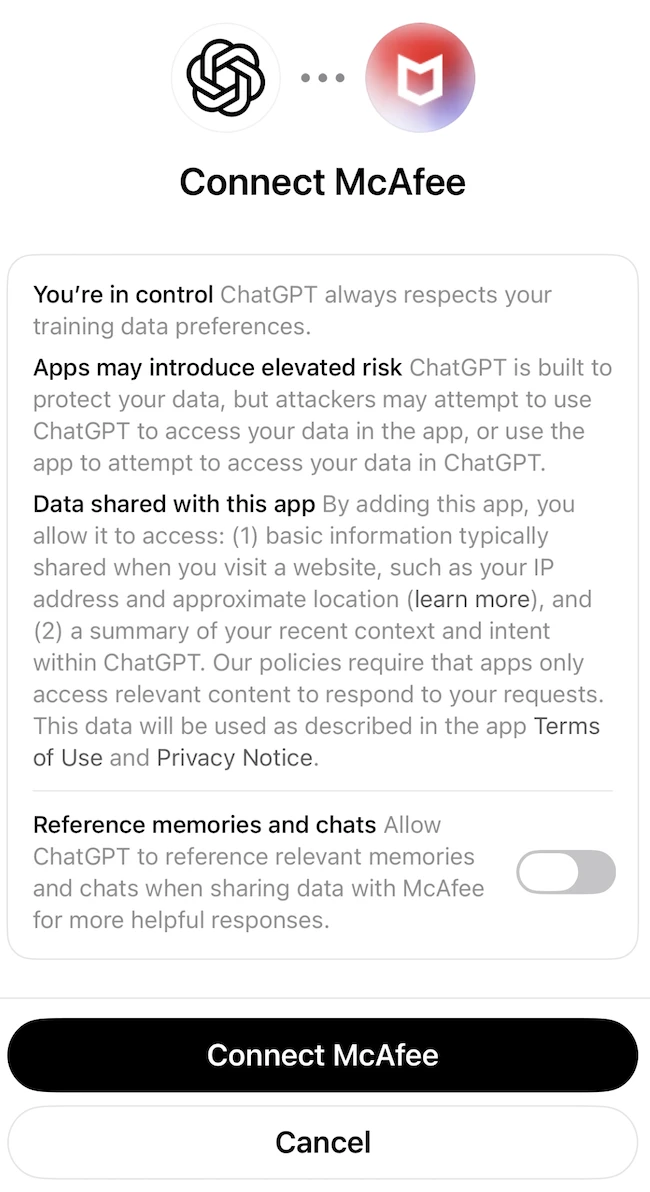
It combines conversational AI with McAfee’s cybersecurity intelligence to help users evaluate potentially dangerous content such as messages, emails, links, screenshots, and social media posts for signs of scams or phishing.
How McAfee + ChatGPT helps identify phishing attempts
The integration allows users to paste suspicious URLs into ChatGPT to receive a reputation analysis powered by McAfee’s threat intelligence technology. It can also assess text-based content for indicators such as impersonation attempts, urgency tactics, and deceptive language patterns.
Users can upload screenshots of messages or websites for visual review, with the system providing explanations of why specific content may be considered risky and offering guidance on next steps to reduce exposure, account compromise, or financial loss.
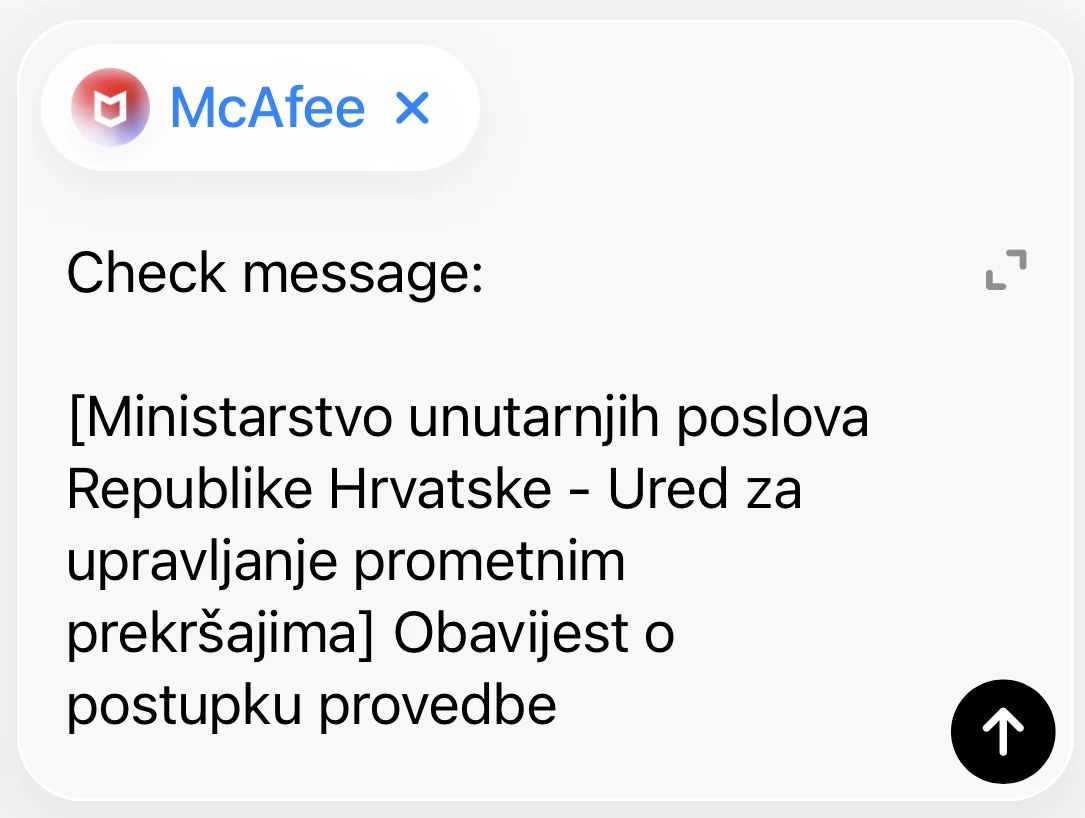
After enabling the integration, I tested it using a recently received message from the Ministry of the Interior related to a speeding violation. I copied the message into ChatGPT, which analyzed it and identified several phishing indicators.
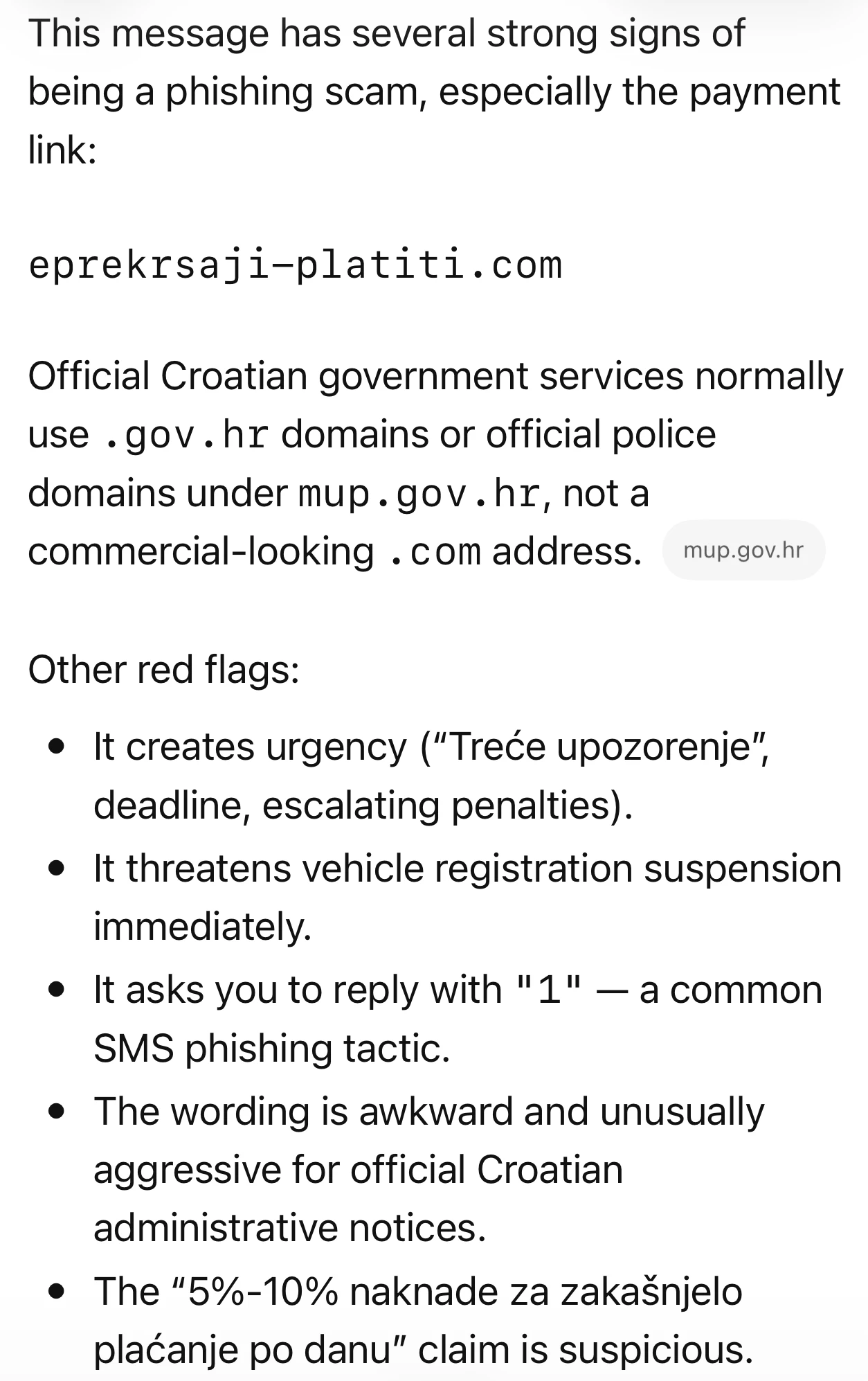
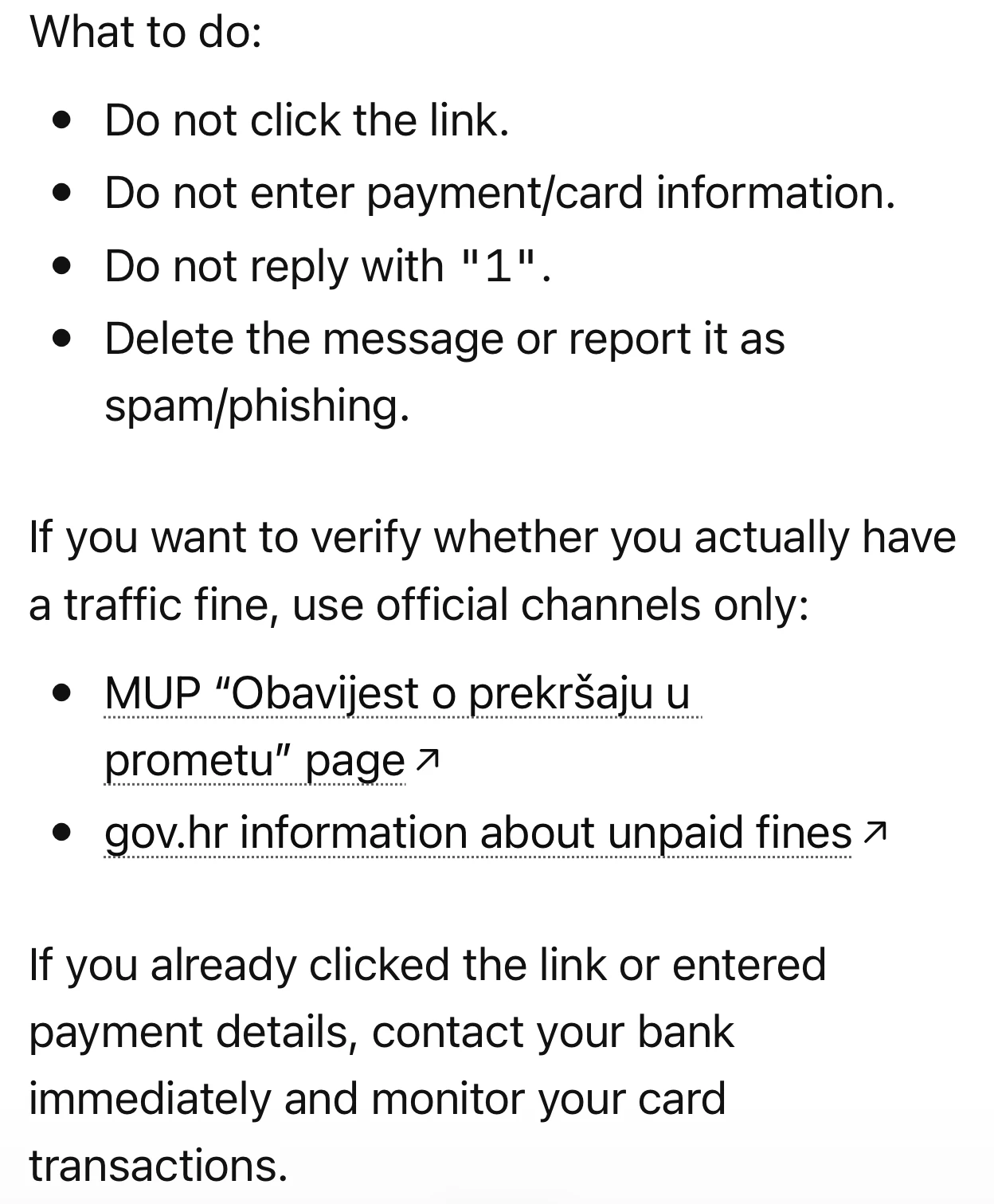
The message showed multiple indicators consistent with a phishing attempt impersonating the Croatian Ministry of the Interior. A non-governmental domain was used, along with pressure tactics such as strict deadlines, threats of vehicle registration suspension, and a request to reply with “1” to access alleged evidence documents.
Conclusion
The McAfee + ChatGPT integration helped identify phishing indicators, explain why the message looked suspicious, and clarify the risks behind the request. The experience showed how easily a potentially deceptive message can be reviewed in ChatGPT and understood in context before taking action.
