
Power shortages could slow AI data center expansion
AI adoption is increasing demand for data center capacity at the same time operators are running into limits around power, equipment, land, and permitting, according to NTT Data.
Access to electricity is becoming a deciding factor in where new data centers are built, when new capacity comes online and how quickly AI projects can expand.
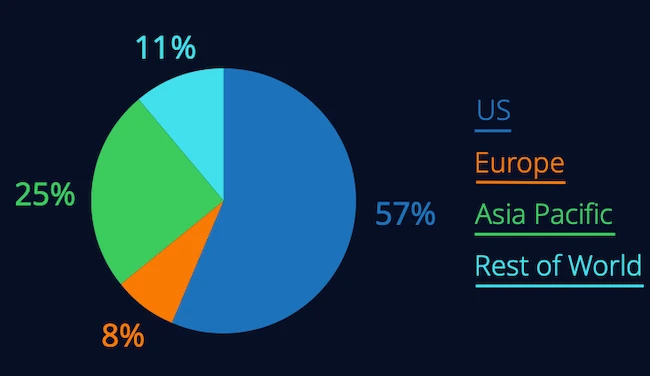
Distribution of new data center capacity by region (Source: NTT Data)
AI changes infrastructure planning
Enterprise workloads spread computing demand across large numbers of servers with relatively predictable power requirements. AI infrastructure concentrates processing into dense clusters of GPU-based systems that consume significantly more electricity and generate more heat. Those environments require high-bandwidth networking and advanced cooling systems to support continuous operation.
That changes the planning process for new facilities. Data center operators are designing larger campuses with greater electrical capacity, while enterprises evaluating AI deployments are paying closer attention to infrastructure availability alongside compute resources.
AI workloads will continue increasing their share of installed capacity through the end of the decade, showing continued investment in AI training and inference infrastructure.
“AI demand is accelerating faster than many parts of the underlying infrastructure system can respond,” said Doug Adams, CEO and President, NTT Global Data Centers. “The challenge now is not simply scaling capacity, but removing the operational and supply-side constraints that delay deployment and erode the economics of AI investment.”
Electricity affects every stage of expansion
Power has become a planning constraint because every new data center depends on grid capacity before construction can begin. Land can be acquired and buildings can be designed, yet projects still depend on utilities delivering enough electricity to support high-density computing environments.
Transmission infrastructure, substations and grid connections all influence deployment schedules. Data centers account for about 1.5% of global electricity consumption, with demand concentrated in established data center markets where facilities can represent 20% to 30% of local electricity use.
Operators are working directly with utilities on demand-response programs and dedicated infrastructure investments to support additional electrical load. Those efforts help utilities prepare for continued growth in AI infrastructure and improve long-term planning for new capacity.
Equipment availability affects deployment timelines
Power infrastructure depends on equipment with long manufacturing cycles. Transformers, switchgear and backup generation systems each require procurement, installation and commissioning before facilities become operational.
The analysis identifies supply constraints across several of those categories, with large power transformers carrying lead times measured in years and switchgear requiring extended delivery schedules. GPU availability remains another dependency for operators expanding AI capacity, adding pressure across multiple parts of the supply chain at the same time.
Those timelines influence construction schedules even after financing, permitting and site selection have been completed.
Regional differences are becoming more visible
The United States continues to hold the largest share of global installed capacity and remains the largest market for new development. Europe faces greater pressure from electricity availability, regulation and community approval processes, giving it the highest infrastructure stress score among the regions evaluated in the outlook. Asia-Pacific continues expanding capacity with comparatively lower projected infrastructure stress, supported by continued investment across several markets.
Those regional differences are likely to influence where future AI infrastructure is deployed as operators balance power availability, construction timelines and customer demand.
