People are willing to pay to vanish from search results
More than half of U.S. adults would like to see a log of everyone who has searched for their name online. In a survey of 1,008 adults by Incogni, 53% said they would like that record to cover the past five years, and 55% said they would pay to have their personal information permanently removed from all public search results.
“You can learn an extraordinary amount about someone without ever speaking to them. Their address, work history, and family connections may all be just a few searches away,” said Darius Belejevas, Head of Incogni.
“The real concern is no longer only what someone can find about you, but what AI can infer by connecting the dots. An address, an old workplace, or a family connection might seem harmless in isolation. Together, they can reveal patterns about someone’s life that they never intended to make public.”
Mixed feelings about being searched
Looking someone up before a date, a job interview or a meeting has become routine. Thirty-nine percent of respondents considered it a normal part of life for a friend, date or co-worker to search for them. Others would feel uncomfortable or consider it an invasion of privacy. Four in ten would worry if someone they had researched found out about it.
Curiosity and concern were the most common reactions to the idea of being researched in detail. Other respondents said they would feel anxious, upset, happy or excited.
Paying to find out who’s searching
Nearly half would pay to learn who has looked them up. Interest was highest for Gen Z, with 64% willing to pay.
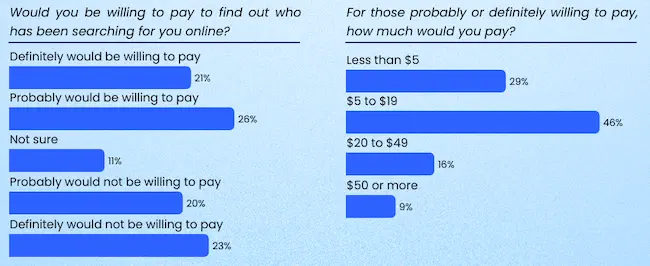
Almost half would pay to know who’d searched for them online (Source: Incogni)
Conventional search engines do not provide such a record. People generally cannot see who has searched for them, what information was found or how it was interpreted.
Googling yourself first
Just over half of respondents have searched for their own name in the past five years. Applying for a job, renting a home and going on a date were the most common specific occasions for checking their online presence.
In each situation, someone else’s impression of them could influence an important decision. A self-search gives people an idea of what a hiring manager, landlord or potential partner might discover.
Hiding posts from family
Four in ten respondents have deleted or hidden a social media post out of concern about who might see it. Gen Z respondents were the most likely to do so.
Family members topped the list of people respondents wanted to hide their posts from, ahead of employers and ex-partners. Government and law enforcement ranked last.
Personal relationships can influence what people choose to share online. People may share different aspects of their lives with relatives, friends, partners and colleagues.
What stays online
Data brokers and people-search sites compile home addresses, phone numbers, family connections and employment histories into searchable profiles. Individuals may never have chosen to publish this information, and adjusting their social media privacy settings will not remove it from third-party websites.
While 71% of Gen Z respondents would pay for permanent removal from public search results, only 37% of baby boomers would do the same. The numbers come from a hypothetical offer and do not measure actual purchases.
Older generations grew up when personal records were less accessible. Younger adults have had much of their lives documented online from an early age. For them, removing personal information may be a way to regain some control over their privacy.
“We can’t control every search made about us, but we can limit some of the information available to those searching. Reviewing your digital footprint and removing unnecessary personal details from websites is a good place to start,” Belejevas concluded.