
MazeBolt brings AI-generated attack simulation to DDoS security testing
MazeBolt has announced the launch of RADAR VectorAI, a new MazeBolt module that creates AI-generated DDoS attacks. As AI outpaces human response, enterprises need to have access to validated DDoS vulnerability data about both known and AI-generated attack vectors.
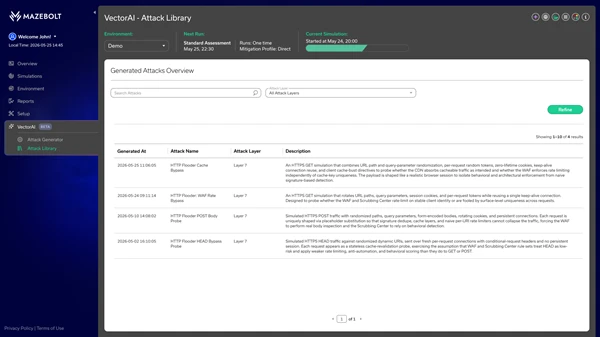
Mythos has raised awareness of the cybersecurity risks created by AI. But while Mythos makes it faster and easier for attackers to identify exploitable gaps in software, it does not address DDoS vulnerabilities. VectorAI functions as the “Mythos of DDoS,” providing enterprises with vulnerability data on deployed DDoS protections and how AI attacks can bypass them.
“AI-driven cyber-attack capabilities are advancing faster than most enterprises are prepared for,” said Matthew Andriani, CEO at MazeBolt. “As attackers gain the ability to deploy AI-orchestrated and AI-generated attacks, defenders need environment-specific validation to ensure their protections will hold up against both known threats and new, AI-generated threats.”
For deployed DDoS protections, vulnerabilities are found in defense policy configurations (rather than in software code). Using AI, attackers can now uncover the most promising attack paths quickly and in ways never seen before.
“AI is changing the calculus of cyber risk,” said Eyal Rahimi, VP development at MazeBolt. “What once required time, expertise, and repeated iterations can now happen at the speed of an AI query where the results are never-before-seen attack vectors. VectorAI provides defensive validation of deployed AI DDoS protections, to help ensure that enterprises can stay one step ahead.”
RADAR patented solutions provide a continuous, data-driven DDoS resilience program that identifies and enables remediation of high-priority defense vulnerabilities across the entire attack surface. RADAR solutions validate both AI-orchestrated attacks and novel, AI-crafted attack vectors, all without disrupting online services.
