New infosec products of the week: July 10, 2026
Here’s a look at the most interesting products from the past week, featuring releases from Attestiv, Automox, Codenotary, and First Recon AI.


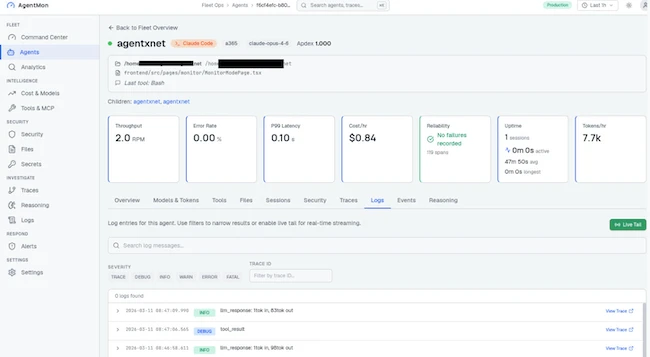
Codenotary launches AI security platform that learns from AI agent behavior
Codenotary has announced AgentMon 3, the latest generation of its enterprise AI security platform, introducing adaptive runtime security policies. These continuously evolve as AI agents operate across an organization by learning from customer-specific workflows, observed behavioral patterns, and threats.
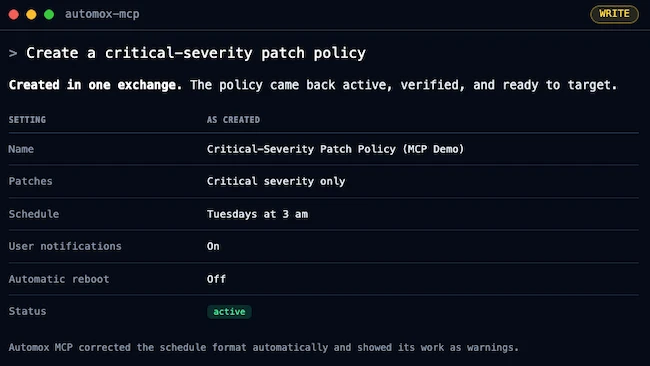
Automox MCP Server adds visual reviews and AI-driven patch policy creation
Automox has released Automox MCP Server 2.2, adding interactive review surfaces, first-class Patch by Severity policy creation, and live capability discovery to its governed agentic interface for endpoint operations. The release advances Automox MCP beyond natural-language access alone, giving IT teams new ways to review, approve, and act on endpoint operations in context. Automox MCP Server covers the published Automox Console and Webhooks APIs, excluding only secret-exposing operations by design.
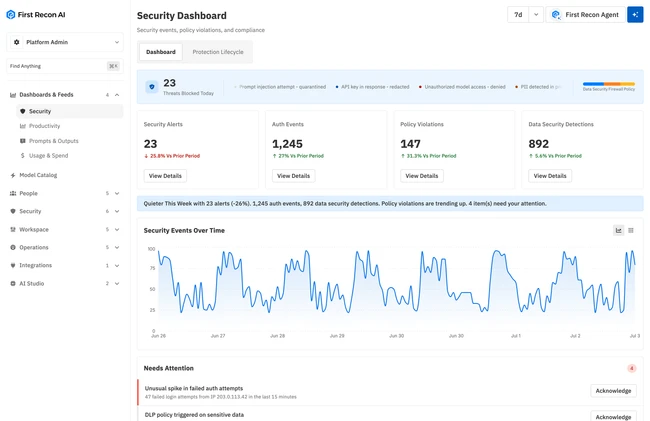
First Recon AI Security Runtime helps enterprises govern AI with audit-ready evidence
First Recon AI has announced the public launch and general availability of First Recon’s AI Security Runtime, a security platform that both governs and secures how enterprises use artificial intelligence across an organization. First Recon’s runtime inspects every AI interaction (human to model, agent to tool, and agent to agent), applies policy inline before data reaches a model, and records every decision as audit-ready evidence, so organizations can adopt AI quickly and govern it with confidence.
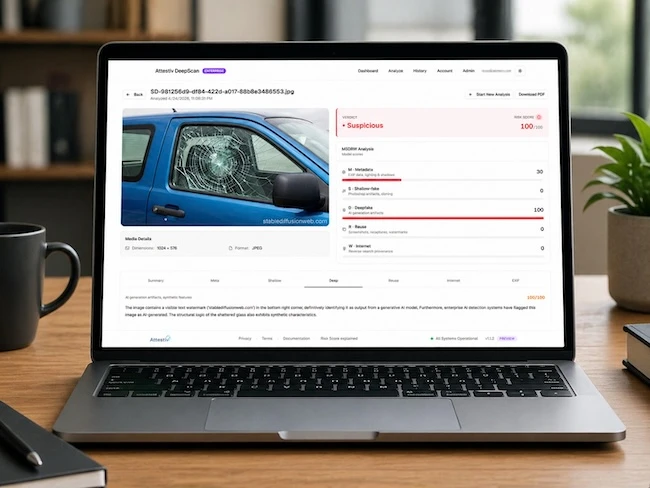
Attestiv DeepScan combines AI and forensic analysis for file validation
Attestiv announced the launch of DeepScan, a new platform built to help organizations automatically validate submitted files before they drive critical business decisions. DeepScan represents a major architectural shift for Attestiv and its customers: moving from detecting fake or manipulated media in isolation to validating whether submitted photos, documents, audio, and video can be inherently trusted within the specific context of a business workflow.