
Product showcase: Is this image real? Slop or Not investigates
Slop or Not is an AI text and image detector for iPhone and Mac that runs entirely offline, with no account required. It uses on-device AI models powered by the Apple Neural Engine to detect AI-generated content.
According to a recent survey, 85% of people say they struggle to distinguish authentic content from AI-generated material, up from 66% a year earlier. Half of respondents reported encountering AI-driven scams, including deepfakes, voice cloning, fake reviews, and personalized phishing attacks, prompting many to limit what they share online. The findings suggest that increasingly realistic AI-generated content is making scams harder to identify and eroding trust online.
The app also includes a quiz that tests your ability to distinguish AI-generated images from real ones. I approached it as an average user, relying on first impressions rather than closely examining each image. Out of ten images, I correctly identified six, while four fooled me.
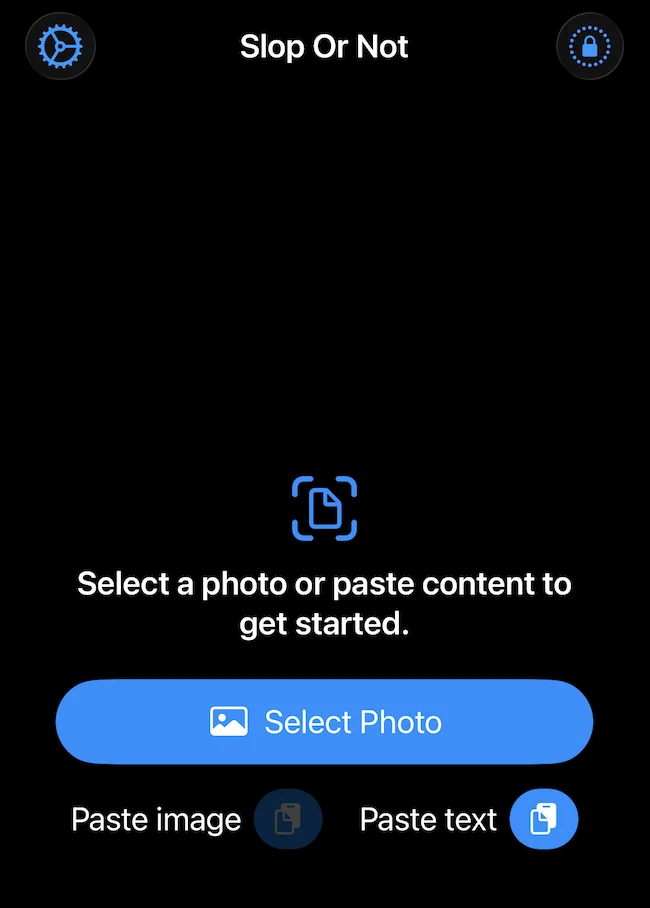
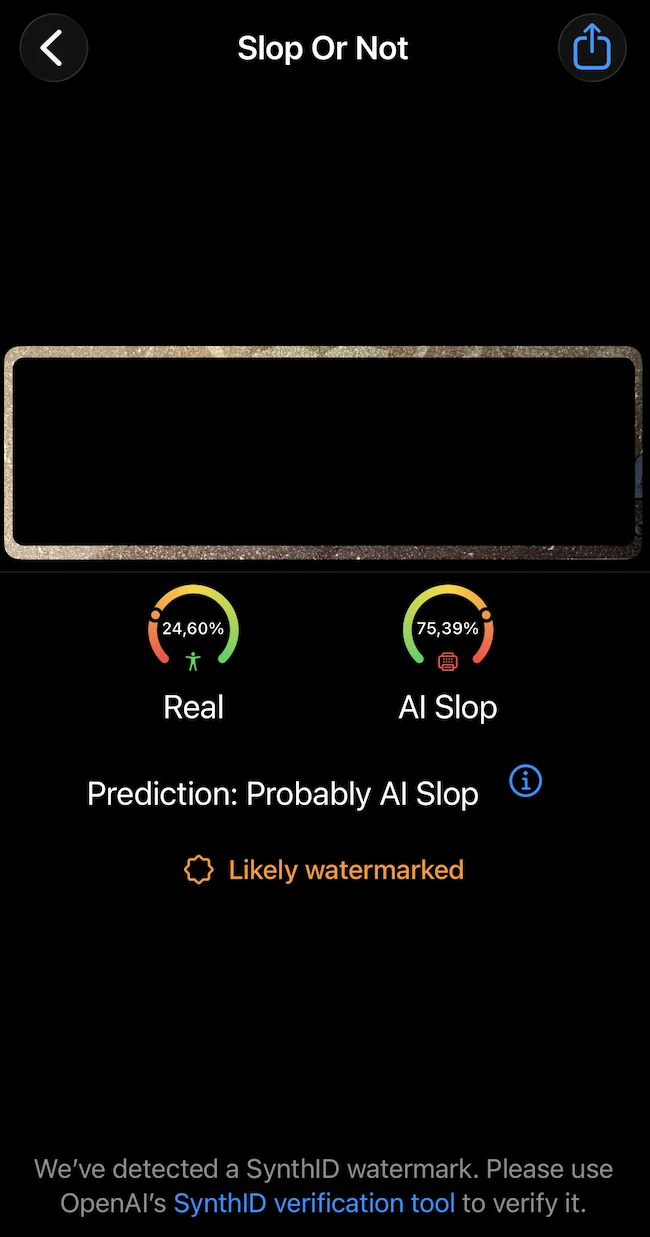
Slop or Not provides a probability score showing how likely an image is to be AI-generated. It checks for Google’s invisible SynthID watermark, allowing compatible images to be verified directly on the device. During my testing, I also scanned a photo of a credit card, and the app reported it as “Likely Watermarked.” When a SynthID watermark is detected, it provides additional evidence that an image originated from AI.
Testing the detector
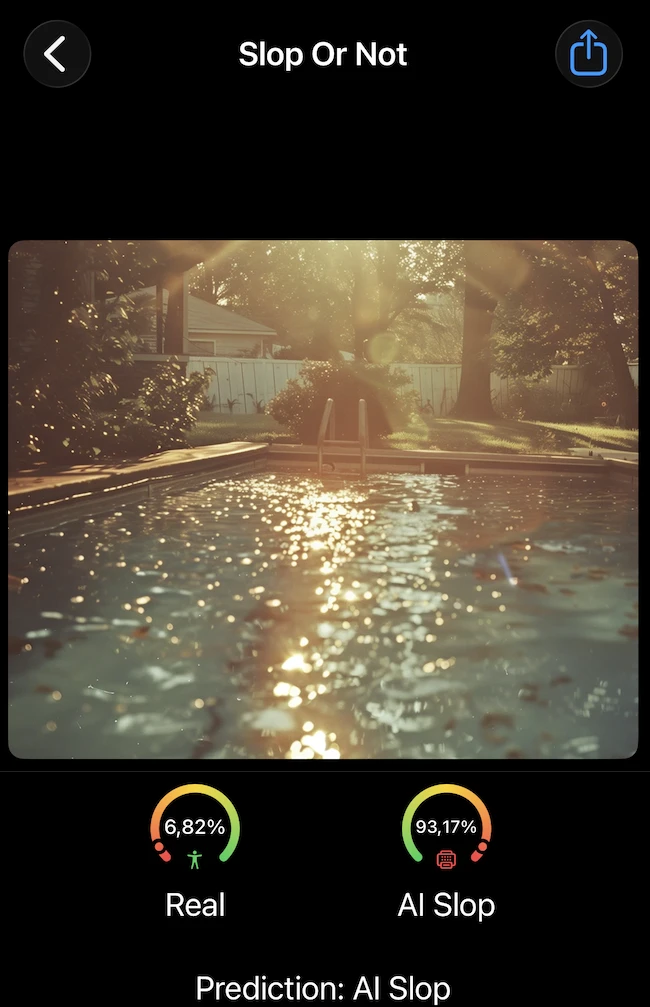
To see how the app performs, I tested it with several images of my own. The first was a highly stylized image of a backyard swimming pool generated with AI. The app identified it as AI-generated with more than 93% confidence.
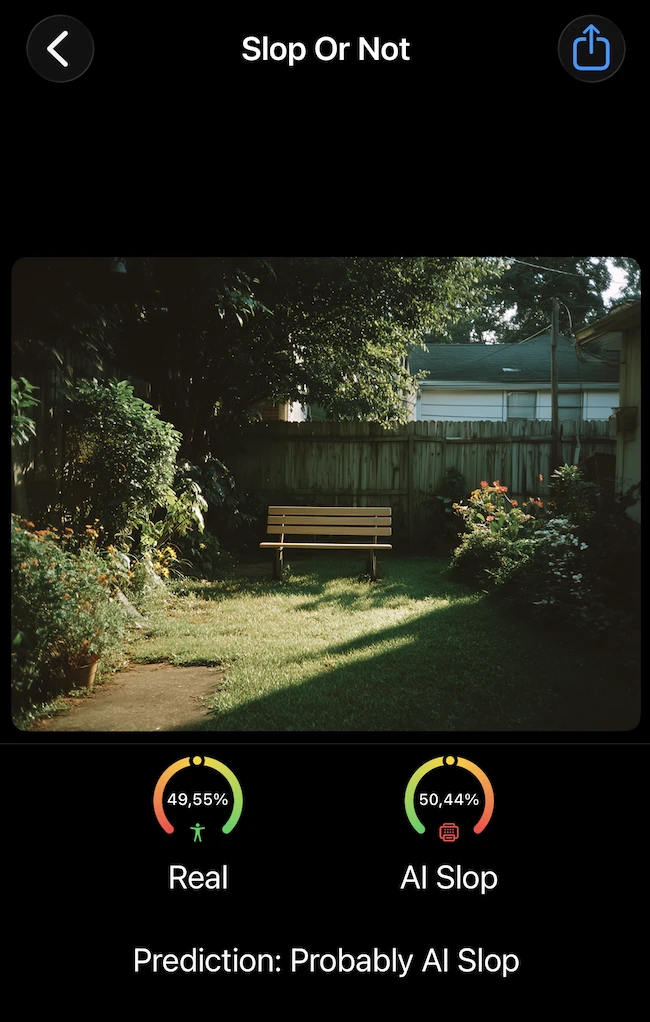
I then tested another AI-generated image of a garden with a wooden bench. This one was much more convincing, and the app returned an almost even split: 50.4% AI-generated versus 49.6% real. It still classified the image as “Probably AI Slop,” showing that some images fall into a gray area rather than producing a definitive result.
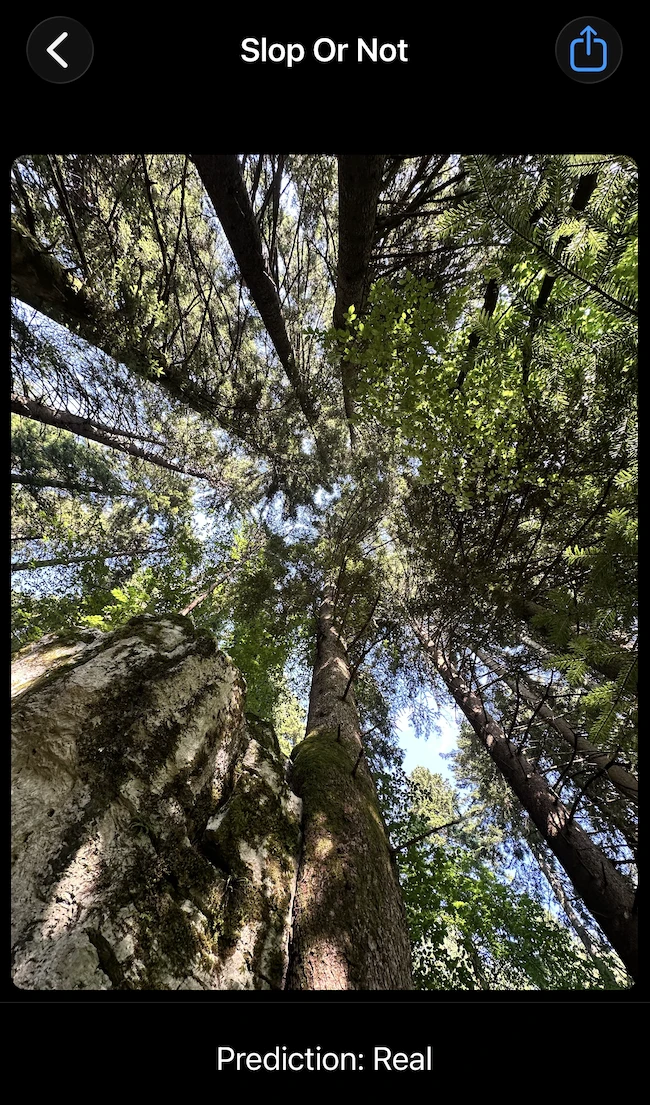
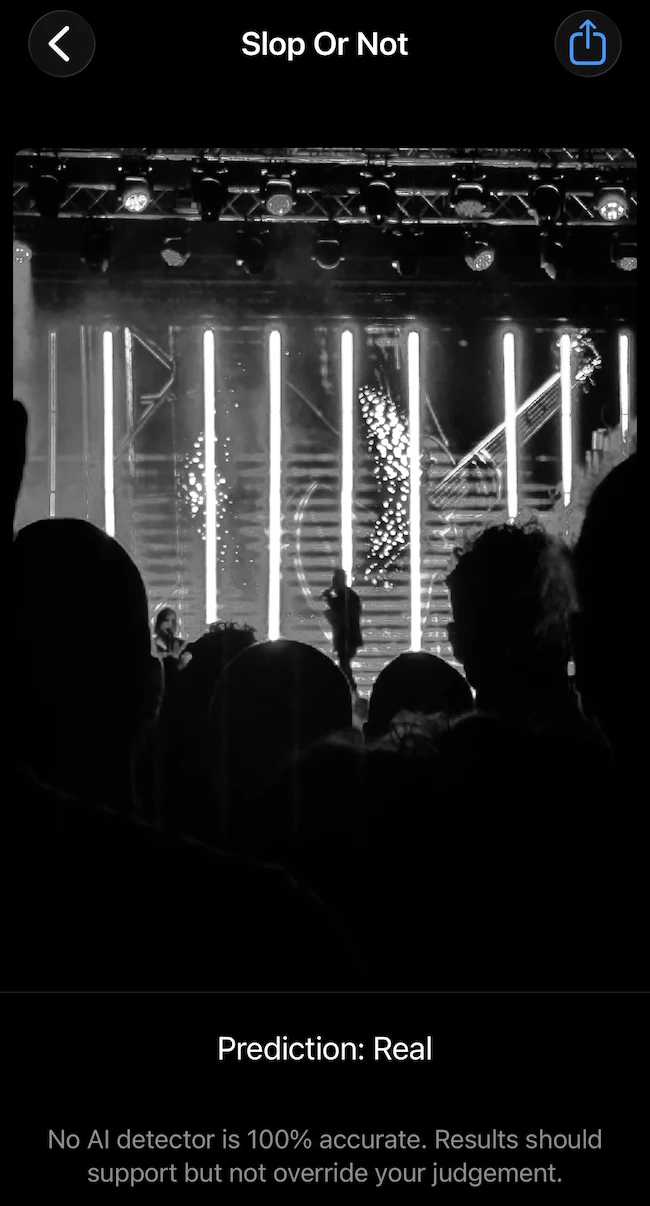
To compare the results, I scanned two genuine photographs. One showed tall trees in a forest viewed from below, and the other was a black-and-white concert photo taken from the audience. The app correctly identified both as real.
To reduce the risk, experts recommend verifying unexpected requests through another trusted channel, using AI detection tools, enabling MFA, limiting the personal media you share online, and staying informed about new deepfake techniques.
Final thoughts
Slop or Not can analyze suspicious social media posts, AI-generated portraits, manipulated photos, product images, and screenshots shared through messaging apps. Students and educators can review essays for AI-generated text, journalists and fact-checkers can verify images before publication, and businesses can check reports, marketing copy, or confidential documents without uploading sensitive files to cloud-based services.
I would recommend Slop or Not to anyone who regularly encounters AI-generated content, values privacy, or wants an additional layer of protection against scams and misinformation. At the same time, AI detection is not an exact science, and no tool can guarantee perfect accuracy. The impact of AI is not entirely black and white. Tools like Slop or Not can support informed decisions, but they should complement, not replace, critical thinking and human judgment.
