
Microsoft zeroes in on AI-driven data risks in Fabric
New Microsoft Purview innovations for Microsoft Fabric help organizations secure data and accelerate AI adoption. The updates focus on identifying risks, preventing data oversharing, and strengthening governance and data quality across the data estate.
Integration between Microsoft Purview and Microsoft Fabric delivers unified data security and governance, enabling protection of sensitive data, maintaining visibility across the data environment, and supporting data readiness for AI use.
“Microsoft Purview and Microsoft Fabric deliver an integrated and unified foundation that enables organizations to innovate with confidence, ensuring data is protected, governed, and trusted for responsible AI activation,” Darren Portillo, Product Marketing Manager at Microsoft, explained.
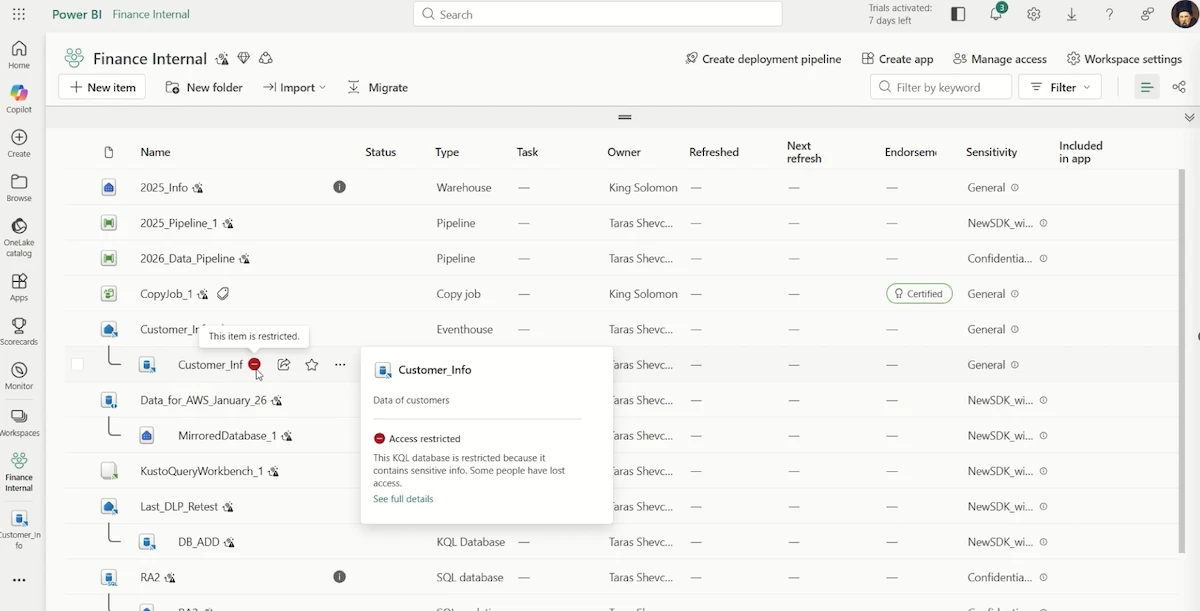
DLP restrict access preventing data oversharing of customer information stored in a KQL database. (Source: Microsoft)
Discover risks and prevent data oversharing
Microsoft Purview provides data protection capabilities across the Fabric data estate, including Information Protection, Data Loss Prevention (DLP), Insider Risk Management (IRM), and Data Security Posture Management (DSPM).
Preventing data leakage
DLP policies in Fabric help prevent data oversharing by identifying sensitive data and triggering policy tips. Admins can restrict access to sensitive data in Fabric workloads, including Warehouse and databases, to reduce exposure and limit access to authorized users.
Insider risk policies for Fabric
Insider Risk Management in Microsoft Purview extends to Fabric lakehouses. It provides built-in risk indicators based on user activity, including potential data exfiltration. Organizations can use policies to detect risky actions such as exporting data. A pay-as-you-go model allows tracking of usage and costs.
Managing AI data exposure
New preview capabilities support risk detection in Copilot and agent interactions. Organizations can identify sensitive data in prompts and responses and take recommended actions to reduce risk.
DSPM provides data risk assessments to identify sensitive or unprotected Fabric assets. These insights help organizations take actions such as applying labels or policies to reduce exposure.
Microsoft Purview also supports governance of AI usage through capabilities such as Audit, eDiscovery, retention, and detection of non-compliant activity.
Improve governance and data quality
Microsoft Purview Unified Catalog provides a centralized view of data assets to support enterprise data governance. It helps organizations discover and use data while maintaining governance standards for AI scenarios.
Built-in data quality capabilities allow organizations to measure, monitor, and improve data quality, supporting trusted data for decision-making and AI.
For Fabric OneLake catalog users, Microsoft Purview extends governance capabilities across data consumers and governance teams.
Controlled data publishing
Workflows in the Unified Catalog allow data owners to manage the publication of data products and glossary terms. These workflows support consistent governance and help maintain a curated catalog.
Quality checks for unmanaged data
Data Quality for unmanaged assets allows organizations to run quality checks without linking assets to data products. This enables faster validation at scale and supports broader access to reliable data for AI use cases.