
Buying TikTok followers can expose users to scams and account theft
Buying TikTok followers, likes, or views could do more than inflate engagement metrics. According to Malwarebytes, many services selling social media growth operate through deceptive practices that can expose customers to scams, stolen accounts, and financial loss. The market for artificial social media engagement also creates security risks for both buyers and other platform users.
Behind the promises of instant engagement
Websites selling bulk engagement present themselves as legitimate marketing companies, offering likes, comments, followers, or the ability to message large numbers of accounts in a short period. Many advertise identical packages for TikTok, YouTube, Instagram, and other platforms. Engagement is typically generated through bots, click farms, or hijacked TikTok accounts, despite many of these sites claiming otherwise.
“Even if your engagement numbers increase initially, TikTok’s fraud detection systems can remove artificial engagement, and accounts that repeatedly use these services risk being flagged or restricted,” Stefan Dasic, Senior Malware Research Engineer at Malwarebytes, explained.
Some providers ask customers to supply more than a TikTok username. They request account credentials or encourage users to authorize third-party access in exchange for followers or views. Providing that information gives the provider access to the account and creates an opportunity for misuse if the service is fraudulent or its systems are compromised.
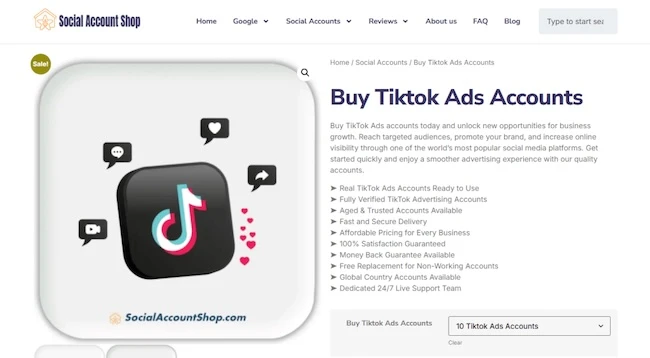
Buy Tiktok Ads Accounts (Source: Malwarebytes)
Many of these websites also sell TikTok Ads accounts advertised as established and trusted. Sellers claim buyers can begin running advertising campaigns immediately without creating a new account or completing TikTok’s verification process. Many also promise a replacement account if the original is suspended or stops working.
Buyers have no way of verifying how these accounts were obtained. They may have been created using stolen identities, fake personal information, compromised payment cards, or other fraudulent methods. If TikTok identifies an account as suspicious, it may suspend it along with any active advertising campaigns. A replacement account does not restore lost campaigns, advertising spend, or business continuity.
Offers that collect more than payments
Some websites promote guides or services that claim to help users earn money on TikTok. Their landing pages typically advertise a proven strategy for growing an account or increasing sales, often supported by success stories that cannot be independently verified.
Before revealing what they are selling, these sites usually ask visitors to provide an email address or phone number. The offer may then turn out to be a paid course, an account management service, or a request for access to the user’s TikTok Shop or TikTok Ads account.
Malwarebytes says these offers require users to place significant trust in companies whose legitimacy may be difficult to verify. Depending on the service, customers may end up sharing personal information, making payments, or granting third parties access to their TikTok accounts.
Fake growth comes with risks
Malwarebytes notes that fake engagement does little to build a genuine audience. Purchased followers and automated views do not represent interest in a creator’s content, making engagement metrics a poor reflection of actual reach or community growth. The company also says platforms actively look for inauthentic behavior, creating additional risks for accounts associated with artificial engagement.
Beyond individual customers, Malwarebytes says the industry supports a broader underground market. Revenue from engagement-selling services may help sustain operations involved in account theft, bot activity, and other forms of cybercrime.
