
Microsoft extends zero trust deeper into enterprise AI
Microsoft expanded its Zero Trust for AI strategy with updates to the Zero Trust Assessment tool and the Zero Trust Workshop. The additions help organizations assess security …

Suppliers, logins, and AI tools are all becoming attack paths
Cybercriminals and state-backed hacking groups are abusing trusted identities, cloud services, AI tools, and software supply chains to gain access while avoiding detection, …
Cloudflare OS goes open source with a record of everything its agents read
Cloudflare open sourced Cloudflare OS, the agent platform whose first version its own employees have used since May. Every resource an agent reads gets recorded, the record …

INTERPOL flags AI as the new engine of African cybercrime
Africa’s growing digital economy is exposing governments, businesses and internet users to a rising wave of cybercrime. The continent recorded more than 1.1 billion …

Cloudflare gives AI agents wallets with built-in spending controls
Cloudflare’s Wallets will give AI agents running on its platform a human-readable wallet handle for paying APIs and online content within limits set by their creator. …
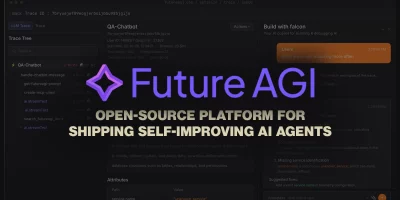
Future AGI: Open-source platform for shipping self-improving AI agents
Future AGI is an open-source platform for tracing, evaluating, simulating, and guardrailing LLM agents, licensed Apache 2.0 and self-hostable. Self-hosted instances register …

What stops attackers wrecking industrial plants is knowing how
Engineers at an Israeli food producer spent most of a week rebuilding a refrigeration system after an intruder switched the gas cooler and receiver valves to manual and pinned …
Your enterprise AI footprint is about three times bigger than your model list
Organizations are building AI systems that combine models, agents and external tools instead of relying on standalone AI, according to Snyk’s latest State of Agentic AI …

AI developers targeted via trojanized GitHub repositories
Cybercriminals are cloning popular GitHub repositories for AI tools and developer resources to distribute an infostealer, according to Netskope Threat Labs. (Source: Netskope) …

EU begins enforcing AI Act, putting AI models under the microscope
Europe’s fight to regulate AI models moved from paper to practice on 2 August 2026, when the European Commission’s AI Office and national authorities began …
Chinese hacker used DeepSeek to launch autonomous cyberattacks on vulnerable servers
A Chinese threat actor operating under the aliases “knaithe” and “KnYuan” used multiple LLMs to automate cyberattacks against internet-facing systems …

CISA lays out new guidance for using open-source software
The US Cybersecurity and Infrastructure Security Agency (CISA) has published the Open Source Software: Security Principles and Practices guide, which provides federal agencies …
Featured news
Resources
Don't miss
- Atlassian urges immediate patching of critical Data Center file access vulnerability (CVE-2026-21589)
- Dell System Update flaw allows attackers to gain root privileges (CVE-2026-86360)
- Data breach at Denmark’s population register exposes 8.8 million people
- U.S. Bank CISO says the security role keeps growing and no one can own all of it
- NIS2 compliance: 7 low-cost steps to secure credentials