
Hottest cybersecurity open-source tools of the month: June 2026
Presented here is a curated selection of noteworthy open-source cybersecurity solutions that have drawn recognition for their ability to enhance security postures across diverse settings.

OWASP Agent Memory Guard: Stop AI agents from being weaponized through their own memory
AI agents keep memory across sessions. Conversation history, vector stores, scratchpads, and RAG indexes persist between runs, and anything written into that store becomes a privileged input the agent reads back later. An attacker who plants text in the wrong field can override an agent’s instructions, pull out user data, or steer future tool calls, and the effect survives across sessions because the memory does. Agent Memory Guard is an open-source runtime defense layer that sits between an agent and its memory store, screening every read and write through a pipeline of detectors and a YAML policy.
Agent Threat Rules: Open detection rule format for AI agent security threats

AI agents run inside coding assistants, MCP servers, and multi-agent frameworks, and the access that makes them useful also opens paths to prompt injection, tool poisoning, and credential theft. Public CVE feeds carry agent-execution flaws that reach production faster than the tooling built to catch them. Agent Threat Rules, or ATR, is an open detection format aimed at this category of attack.
AgentGG: Open-source agentic SAST scanner
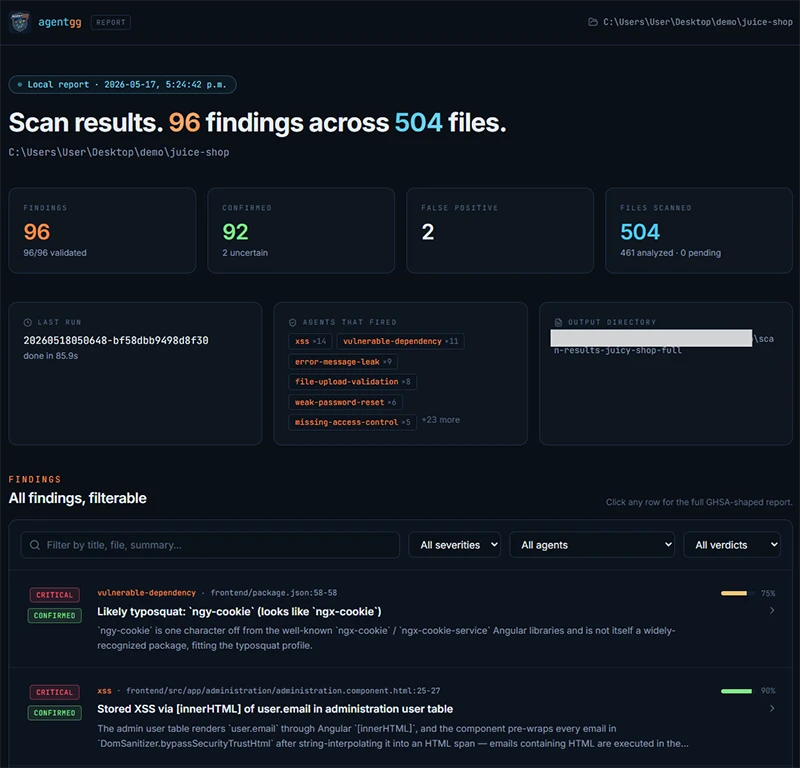
Static analysis tools have spent years matching source code against known-bad patterns and handing engineers long lists of candidate issues to triage by hand. AgentGG approaches the same job with AI agents that read the code, follow imports, walk the call graph, and confirm a finding before they report it. The project is an open-source agentic SAST scanner released under the Apache 2.0 license.
DockSec: Open-source AI-powered Docker security scanner
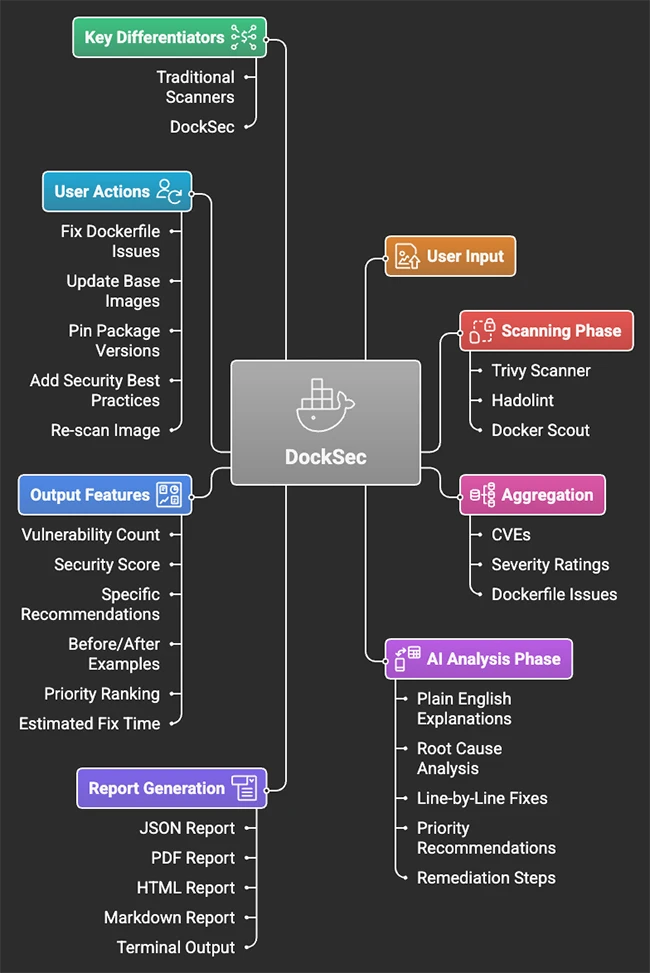
DockSec is an OWASP Incubator Project that combines three container security scanners with a language-model layer for explanation and remediation. Created by Advait Patel, the Python tool runs Trivy, Hadolint, and Docker Scout against a developer’s Dockerfile and image, correlates the findings, returns a 0-100 security score, and proposes line-specific fixes.
Agent Beacon: Open-source telemetry layer for AI agents
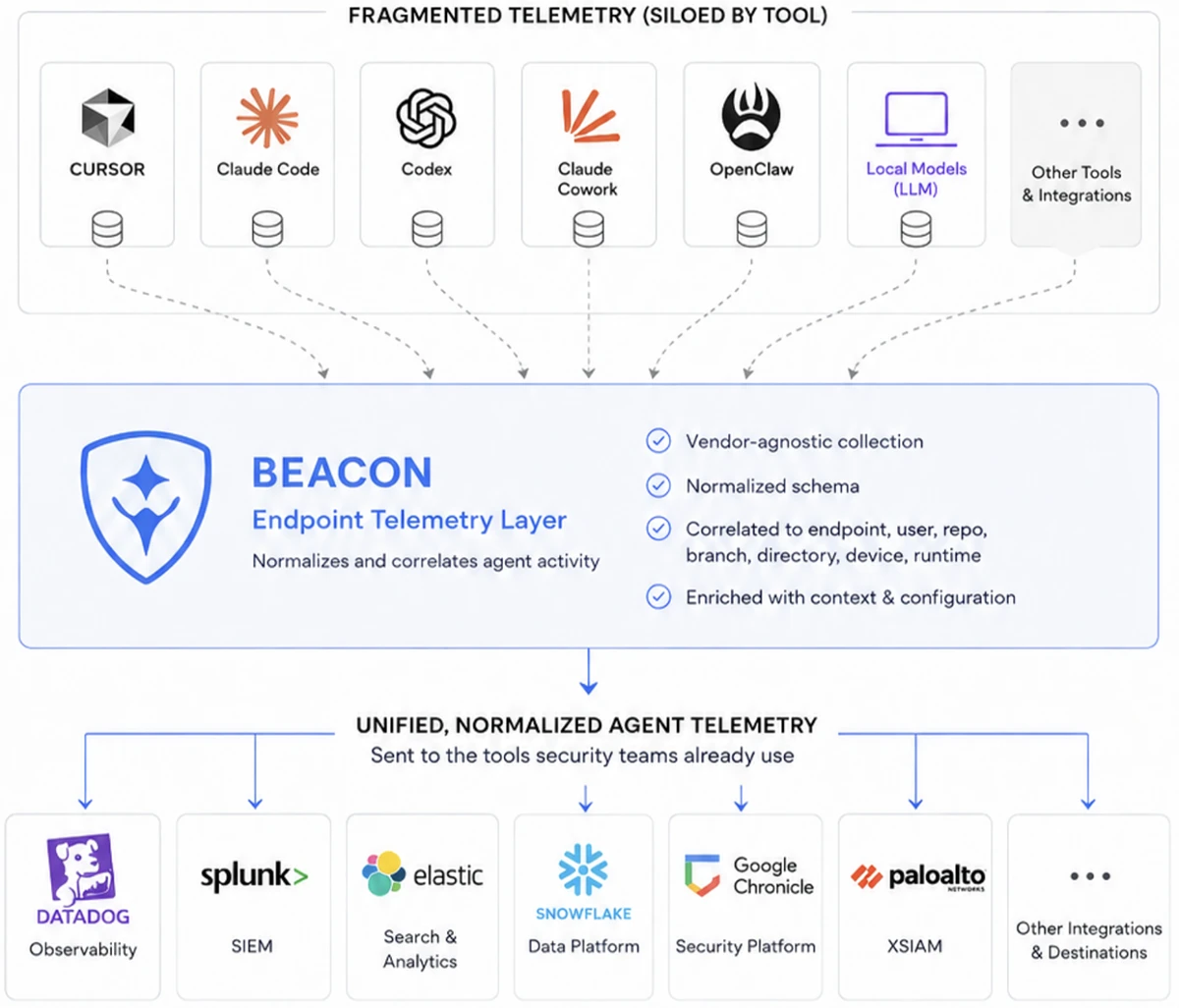
AI coding agents such as Claude Code, Codex CLI, Cursor, and Claude Cowork run on developer laptops, CI jobs, cloud environments, where they edit files, run commands, and call outside tools. Beacon, an open-source project from Asymptote Labs, configures telemetry for those runtimes and writes a normalized record of what each agent does across local, CI, and cloud-agent surfaces.
Praxen: Open-source AI agent behavior verification

Praxen is an open-source tool with a simple job: it checks whether an AI agent does what it claims to do. The tool takes an agent’s declared policy, looks at how the agent operates, and points out every spot where the two drift apart. It is the reference implementation of Agent Behavior Verification, a control model that hands each agent an authorized role and then confirms the controls hold that agent to it.
DarkMoon: Open-source AI pentesting platform
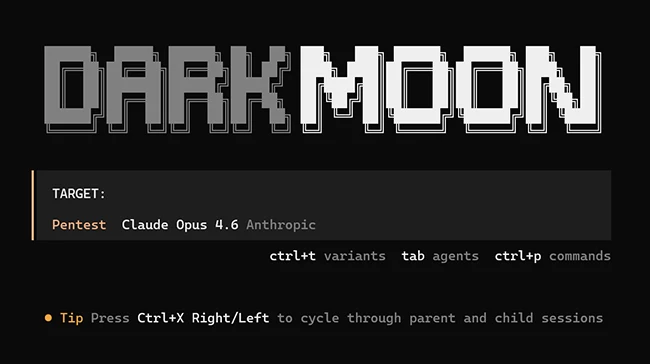
Penetration testing has long run on expert time, with specialists spending days probing a network or web application by hand. Manual engagements stretch across weeks, expert consultants run into thousands of dollars a day, and results vary with the tester. Automation promises to narrow those gaps. A growing set of projects now hands the work to AI agents that plan and execute on their own. DarkMoon, an open-source platform, sits in that group. It runs a security assessment end to end and delivers an evidence-backed report at the finish.
Must read:
- 25 open-source cybersecurity tools that don’t care about your budget
- GitHub CISO on security strategy and collaborating with the open-source community

Subscribe to the Help Net Security ad-free monthly newsletter to stay informed on the essential open-source cybersecurity tools. Subscribe here!
