
Review: CTRL+ALT+PWN
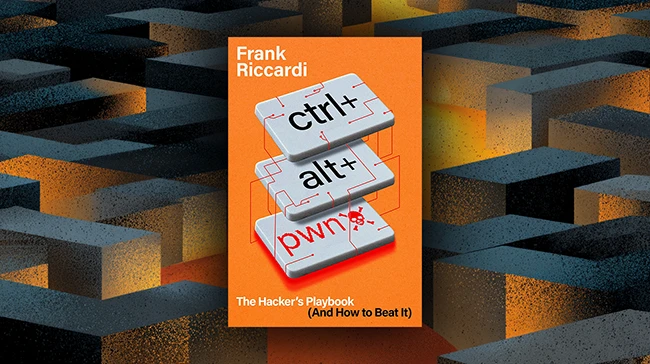
Hacking gear that once sat in well-funded labs now ships to anyone with a credit card and a video tutorial. Frank Riccardi builds his consumer guide, CTRL+ALT+PWN: The Hacker’s Playbook (And How to Beat It), on that one condition.
He spent twenty-five years in healthcare compliance and privacy, leading the response to breaches and ransomware, and he writes for readers he calls non-geeks. The book reads like a tour of the criminal toolkit, narrated by someone who has cleaned up the wreckage.
The early chapters cover tools that take almost no skill to run. A Wi-Fi Pineapple, a small router, can mimic a coffee-shop network and pull traffic from phones that auto-connect to familiar names. A Raspberry Pi becomes a launch pad for attacks, and cheap USB dongles hide keystroke injectors. Riccardi’s central claim lands here: the hoodie-wearing teenage hacker is a myth that costs money, because it leads executives to underfund defenses against organized, well-resourced crews, some of them backed by nation-states.
The middle of the book runs scam by scam, covering phishing, smartphone exposure, the Nigerian-prince con, romance fraud, and deepfakes. Each gets a real case and a plain-English breakdown of the mechanics, from spoofed Apple emails in the celebrity photo thefts to voice-cloning calls behind wire-fraud schemes. Romance scams alone drained more than a billion dollars from American victims in a single year.
Deepfakes get a lot of space, and the author treats detection as a losing arms race. He explains how training a generator against a detector lets each new fake defeat the tool built to catch the last one. A detector running at 99 percent accuracy still lets millions of images slip through at internet scale. His counsel rests on verification habits: call back on a known number, agree on family code words, and treat any urgent money request as suspect.
The book sharpens in its final third, where the author turns to blame. He treats victim blaming as an accomplice to the crime, using just-world bias and fundamental attribution error to explain why the public mocks the scammed. He then takes on corporate “No Harm, No Foul” defenses and the court rulings behind them.
Riccardi resists a one-sided story on accountability. He argues that companies own their defenses and that users can still deserve blame for reckless conduct, borrowing the Just Culture model from hospitals to separate honest mistakes from negligence.
The payoff is a closing program Riccardi calls Smashmouth Cybersecurity, a habit set he frames as the everyday person’s answer to organized crime. It comes down to a short list: a password manager, long and unique passwords, multifactor authentication, encrypted devices, and steady patching. The advice amounts to standard cyber hygiene, delivered with enough story to make it stick. For a general reader, or a professional shopping for a gift a non-technical relative will finish, CTRL+ALT+PWN earns its keep.
