
Europe’s digital identity wallet gets its first set of standards
People across the European Union already use their phones for banking, travel, and government services. The European Digital Identity Wallet will bring those activities into one application, and the European Telecommunications Standards Institute (ETSI) has released the first standards that support it.
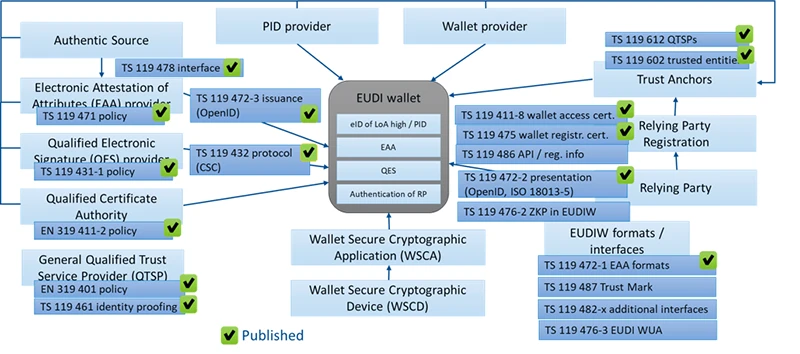
What the wallet does
The wallet lets EU citizens and residents prove their identity and share specific attributes, such as their age, a diploma, or an authorization. It works across government services, healthcare, banking, travel, education, and other areas. Each EU Member State will offer at least one wallet to its users, and the wallets connect to both public and private services across borders.
Users sign in to online services through the wallet with one set of credentials. They can store and manage official digital documents, share verified information such as a diploma or a license, and sign documents with electronic signatures that carry legal weight.
Privacy and security
The wallets use strong cryptography and apply data minimization, so they share only the information a given service requires. They are built to operate the same way across Europe, which lets a wallet issued in one country function in another.
What the first standards cover
The first release contains more than 24 technical specifications. They cover wallet-specific attestation profiles, certificate policies, and trust list formats. They also cover remote signing protocols, identity proofing, and long-term data preservation.
“Our goal is to make digital interactions across Europe as easy and trustworthy as possible, whether you’re travelling, studying, working, or accessing services online. ETSI has a long expertise in electronic signatures, cybersecurity and trust data management. The digital wallets are at the crossroad of these technologies and benefit from our experience,” said Nick Pope, who chairs ETSI’s Electronic Signatures and Trust Infrastructures committee.
Pilots already underway
The wallet is being trialed in large-scale pilots that cover government services, businesses, banking, vehicle registration, and travel. The work sits within a wider European effort backed by the European Commission and the European Economic Area.
Work planned through 2027
ETSI’s Technical Committee ESI will continue this work through 2026 and 2027. It plans to turn the technical specifications into European Standards, fold in feedback from the large-scale pilots and early deployments, build interoperability and conformance testing frameworks, and add standards for more wallet components.
The plan would give each of the European Union’s roughly 450 million citizens access to a wallet.
