
Google quadruples Chrome bug bounty base pay, offers up to $20,000 for sandbox escapes
Google is updating its Chrome Vulnerability Rewards Program (Chrome VRP), increasing payments for memory corruption vulnerabilities and expanding rewards for other security …

Google fixes yet another actively exploited Chrome zero-day (CVE-2026-87491)
Google has fixed 230 vulnerabilities in Chrome, including a zero-day flaw, CVE-2026-87491, with an in-the-wild exploit. “Google is aware that an exploit for …

Google patches actively exploited Chrome zero-day (CVE-2026-85046)
Google has patched 12 vulnerabilities affecting its popular Chrome browser, among them CVE-2026-85046, which has been exploited in the wild. “Google is aware that an …
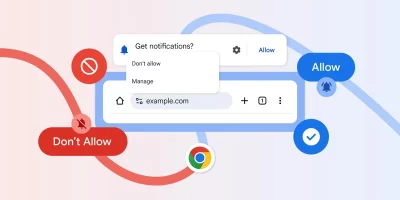
Chrome’s anti-abuse protections block 7 billion unwanted Android notifications daily
Google Chrome’s latest measures against abusive web push notifications include automatically revoking notification permissions for inactive and suspicious websites, …
AI takes on a bigger role in finding Chrome vulnerabilities
Google has expanded the use of AI in Chrome’s security workflow, using it to find vulnerabilities, triage bug reports, generate patches, and review code to shorten the …

Chaos ransomware msaRAT hides its C2 channel inside a legitimate browser process
Cisco Talos has identified a Rust-based remote access trojan it attributes to the Chaos ransomware group, named msaRAT after four of the binding names left in the binary. The …

Google patches Chrome zero-day exploited in the wild (CVE-2026-11645)
Google has fixed 74 vulnerabilities in Chrome, including a high-severity zero-day (CVE-2026-11645) that has been exploited in the wild. “Google is aware that an exploit …

Chrome on Android can now hide your exact location from websites
Google is improving location privacy features that give users more control over sharing their location. On Chrome for Android, users can now choose to share their approximate …

Google to pay up to $1.5 million for zero-click Pixel Titan M exploits
Google has revised its Android and Chrome Vulnerability Reward Programs (VRPs), which pay security researchers to report vulnerabilities in Android, Google hardware, and the …

To counter cookie theft, Chrome ships device-bound session credentials
Cookie theft follows a well-established pattern. Infostealer malware infiltrates a device, extracts authentication cookies, and exfiltrates them to an attacker-controlled …
Google fixes Chrome zero-day with in-the-wild exploit (CVE-2026-5281)
Google has fixed 21 vulnerabilities affecting its popular Chrome browser, among them a zero-day (CVE-2026-5281) with an in-the-wild exploit. About CVE-2026-5281 As per usual, …
Google speeds up Chrome updates with new security-focused release cycle
The Chrome browser is moving to a two-week release cycle, a change intended to give developers and users faster access to new features, performance improvements and bug fixes. …
Featured news
Resources
Don't miss
- Fake Arch Linux AUR packages exploit typos to run malware with root privileges
- Why Active Directory weaknesses stay open for years in teams with one or two admins
- The cyber talent shortage? Job postings just hit a four-year low
- CISA flags exploited flaws in Palo Alto, Cisco and Ahsay products
- Immuta CISO predicts critical AI incidents at major enterprises within 18 months