Keepnet Labs
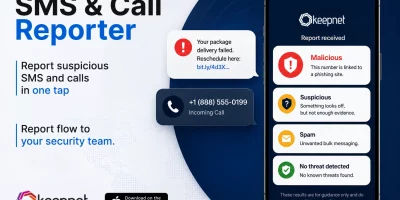
Keepnet launches free SMS/Call Reporter for iOS
Keepnet, an Extended Human Risk Management (xHRM) and Secure Behavior Management platform, today launched the Keepnet SMS/Call Reporter. It is a free app that turns a …

Keepnet contributes voice and SMS phishing data to the 2026 Verizon DBIR
Keepnet, an Extended Human Risk Management (xHRM) platform, today announced that its voice and SMS phishing simulation data contributed to the 2026 Verizon Data Breach …
Keepnet launches AI incident response agents that redefine post-delivery email threat containment
Keepnet, the AI-powered Extended Human Risk Management (xHRM) platform, today announced the launch of its AI-Driven Email Incident Response Agents — autonomous AI agents that …
Keepnet bets on Agentic AI behavioral training to curb security mistakes
Keepnet launched its Agentic AI for Behavioral Microlearning solution, which moves success metrics from “completion rates” to behavior change and verifiable incident …

New hires, new targets: Why attackers love your onboarding process
In this Help Net Security video, Ozan Ucar, CEO of Keepnet Labs, highlights a critical cybersecurity blind spot: the vulnerability of new hires during onboarding. He explains …

Cyberattacks are draining millions from the hospitality industry
Every day, millions of travelers share sensitive information like passports, credit card numbers, and personal details with hotels, restaurants, and travel services. This puts …

71% of new hires click on phishing emails within 3 months
New hires are more likely to fall for phishing attacks and social engineering than longer-term employees, especially in their first 90 days, according to Keepnet. Why new …

What are the most vulnerable departments and sectors to phishing attacks?
While cyber attackers chase down system vulnerabilities and valuable data each passing day, the business world has taken the measures against them. The latest trends and …
Featured news
Resources
Don't miss
- Microsoft 365 accounts compromised at 79 organizations, no passwords needed
- Hackers hijack exposed AI models to launch cyberattacks at victims’ expense
- Drone program compliance: What a CTO says most agencies get wrong
- LiteLLM hit by second supply chain attack this year, users urged to rotate credentials
- OpenAI’s coding agents talked themselves out of being monitored