
Google Search introduces new ways to remove sensitive personal information and explicit images
Google expanded its “Results about you” tool to give users more control over sensitive personal information and added a way to request removal of non-consensual explicit images from Search.
Manage and limit sensitive personal information in Search
Users can request the removal of Search results that contain sensitive personal information, such as driver’s license numbers, passport numbers, and Social Security numbers, through the Results about you hub. First-time users must enter the contact information they want to protect and add the government ID numbers they want monitored. Existing users can add additional ID numbers to monitor.
To prevent misuse and protect users’ privacy, Google applies its security protocols before processing any requests.
Once a user confirms their details, Google monitors Search results. If results containing the specified sensitive information appear, the user receives a notification so they can take action.
Removing this information from Google Search does not remove it from the web entirely, but it helps users control how sensitive personal information appears in Search.
Report and block non-consensual explicit imagery in Search
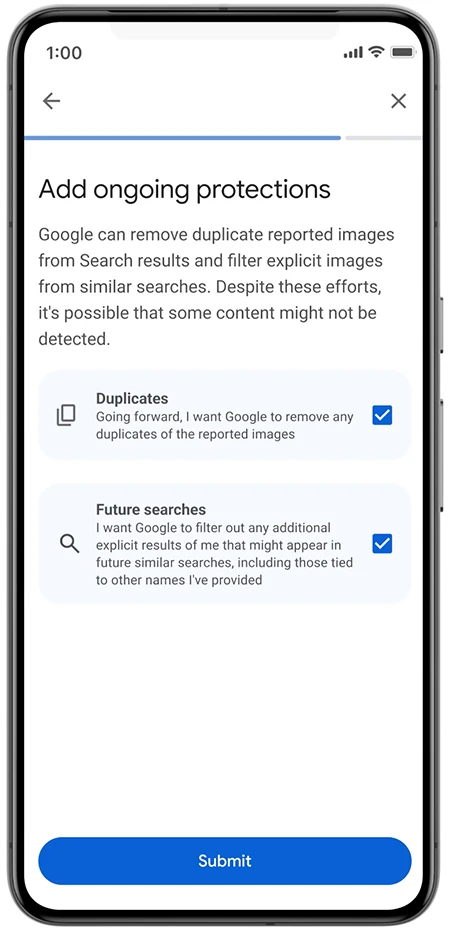
Users who find non-consensual explicit images of themselves in Search results can request removal using a form. To start, users click the three dots on the image in Search, select “Remove results,” and then choose “It shows a sexual image of me.” This directs them to the request process.
After submitting a request, users will find links to expert organizations that offer legal and emotional support.
Users can track the status of their request in the Results about you hub and will also receive email updates when the request status changes.
“We understand that removing existing content is only part of the solution. For added protection, the new process allows you to opt-in to safeguards that will proactively filter out any additional explicit results that might appear in similar searches,” Phoebe Wong, Product Manager at Google, explained.
