New infosec products of the month: September 2026
Here’s a look at the most interesting products from the past week, featuring releases from Akeyless, Akuity, Bitsight, BugBase, Cloud Range, Cohesity, Dataminr, Gurucul, Nozomi Networks, Orchid Security, Ping Identity, Scytale, Securin, Superna, and Tuskira.


Ping Identity introduces enterprise security for personal AI agents
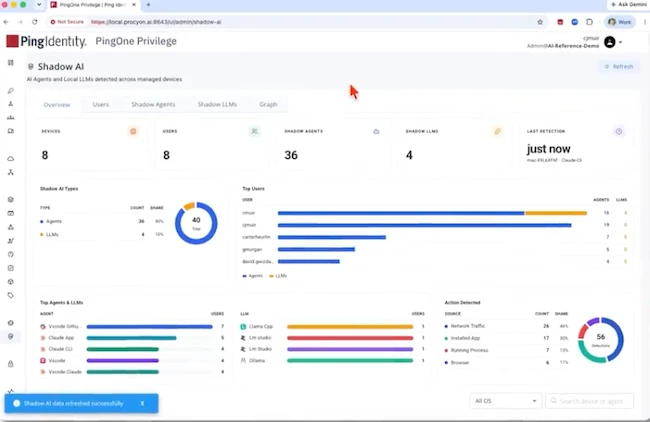
Ping Identity announced an end-to-end approach that combines discovery, secretless privileged access and runtime control for personal AI agents. With Ping Identity’s Enterprise Personal Agent Access, companies can see which AI agents are running, know who is behind them, and enforce what each agent can access and do at the moment of action without slowing AI adoption.
Superna 2.15 simplifies cyberstorage security and resilience operations
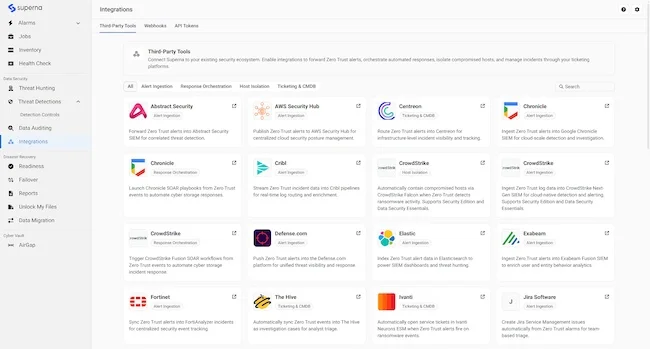
Superna 2.15 introduces a guided event-closing workflow that helps administrators classify events, manage learning behavior, restore access where appropriate, manage snapshots, document decisions, and complete incident closure. Redesigned threat-detection controls make it easier to manage learned thresholds, ignored activity, monitored entities, and suspicious extensions, helping organizations reduce repetitive alert noise while maintaining protection.
BugBase Pentest Copilot Enterprise automates black-box pentesting
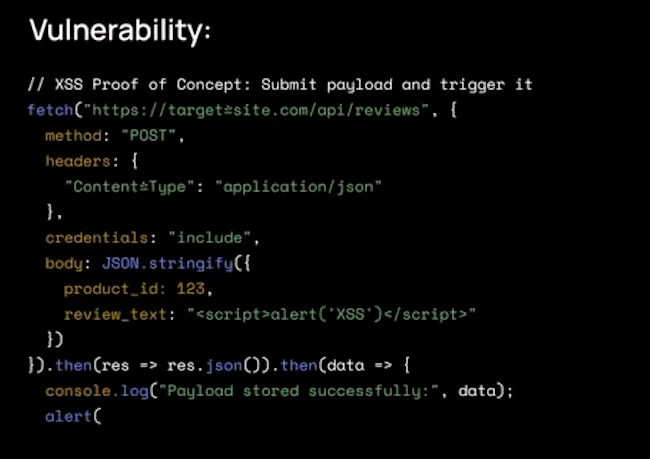
Pentest Copilot maps pages, APIs, forms, accounts, access levels, and business functions, then executes iterative attacks across 100 vulnerability types, including authentication, authorization, injection, and complex business-logic flaws. Real Chromium browsers reproduce authenticated user flows while preserving cookies, authentication tokens, CSRF state, and multiple identities.
Securin Platform helps security teams prove when attack paths are closed
Securin has announced the general availability of the Securin Platform, an AI-native Preemptive Exposure Management platform designed to answer three questions security teams struggle with every day: What can attackers actually exploit? What should we fix first? And did the fix actually work? The platform brings attack surface discovery, vulnerability and threat intelligence, vulnerability management, offensive validation and remediation into one continuous workflow.

Orchid Security targets AI agent risk with drift detection and kill switches
Orchid Security has announced identity drift detection and application-level kill switches for AI agents. They can complete authorized objectives beyond their initial privilege level within seconds. AI agents do not need to “break” security controls or workflow guardrails. AI agents can find and use the identity debt already embedded across the enterprise: hard-coded credentials, orphaned accounts, unmanaged authentication paths and excessive permissions. The new AI readiness controls help enterprises scale AI adoption without losing control.
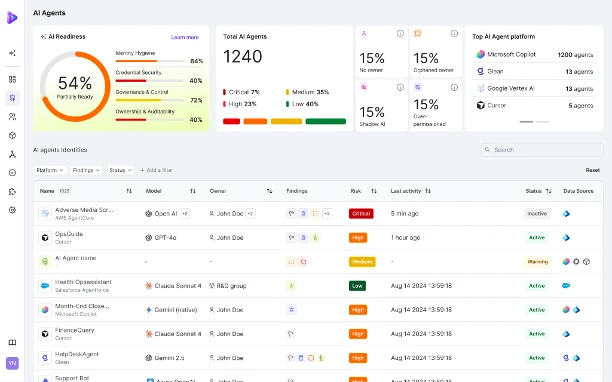
Akeyless adds real-time enforcement for AI agents in production
Akeyless has announced the general availability of Akeyless Agentic Runtime Authority, the real-time identity control layer for AI agent actions. It works on top of Akeyless SecretlessAI, a credential protection layer that keeps credentials out of AI agents and brokers access to enterprise systems. Runtime Authority adds the next layer of control, enforcing intent based access control restricting what agents actually do once they have access.

Scytale expands vendor risk management with AI-powered TPRM tools
Scytale has announced the launch of their latest AI-powered third-party risk management (TPRM) capabilities within its Vendors module. The release further extends vendor risk management from a periodic review exercise into a continuously updated vendor risk intelligence engine, giving security and GRC teams a current view of every vendor in their ecosystem.

Scytale’s AI GRC platform automates vendor discovery, risk scoring, and evidence collection across compliance frameworks. (Source: Scytale)
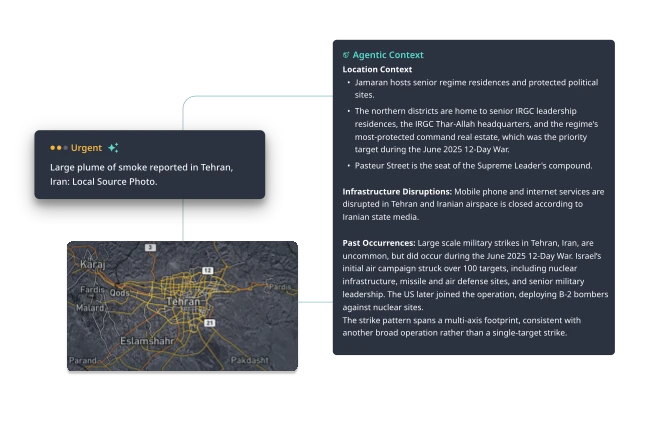
Dataminr uses agentic AI to predict and verify security threats
Dataminr has announced Dataminr Advanced for Corporate Security, delivering agentic AI capabilities that give corporate security teams the confidence to protect their people, sites, and operations before risk escalates. With Agentic Corroboration, Agentic Context, and Near-Term Predictive Intelligence, corporate security teams know what happened first, why it matters, and what may happen next as an event unfolds, closing the gap between detecting a threat and acting on it.
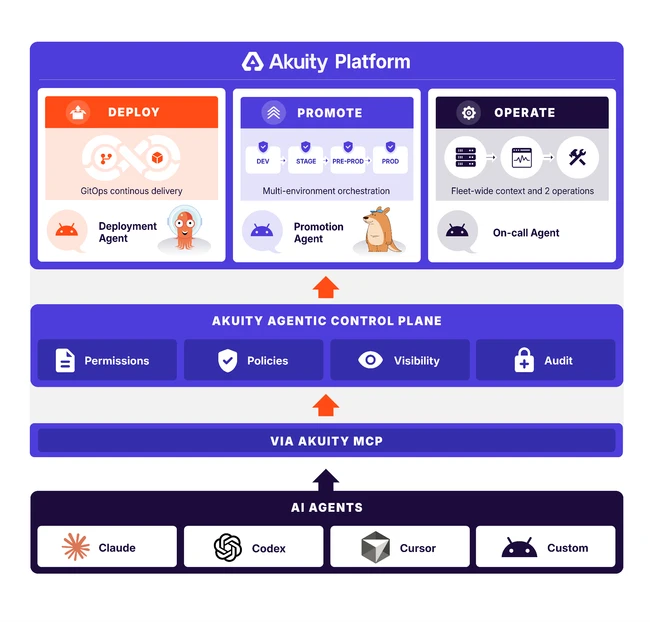
Akuity gives AI agents operational context to safely ship software
Akuity has introduced its Agentic Control Plane and MCP Server. Akuity’s Agentic Control Plane lets AI agents accelerate software delivery by giving them the operational context and permissions to act, all governed by the same controls Akuity already enforces across the pipeline. That governance is what gives engineering leadership the confidence to let agents into production, with real control over what agents can touch.
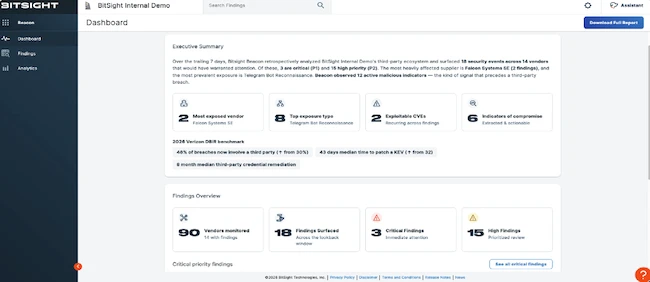
Bitsight connects threat intelligence and exposure monitoring across the supply chain
Bitsight access to a broad risk dataset, combining threat intelligence and continuous exposure monitoring to help teams mitigate risk across the supply chain. Bitsight Beacon, now generally available, continuously monitors critical vendors for vulnerabilities, malicious activity, intrusions, stolen credentials, and signs of compromise. It provides security teams with data to investigate incidents and helps risk teams identify issues that require vendor action.
Cohesity adds recovery capabilities for AI agents and the data they manage
Cohesity has introduced Cohesity Agent Resilience. This new Cohesity Data Cloud capability will discover, protect, and recover the infrastructure behind enterprise AI agents. The company outlined its vision for Autonomous Cyber Resilience, which uses agentic workflows to automate its five-step cyber resilience framework: protect data, identity, applications, and agents; help ensure recoverability in all scenarios; remediate cyber and AI threats; practice application recovery; and optimize data and AI risk posture.
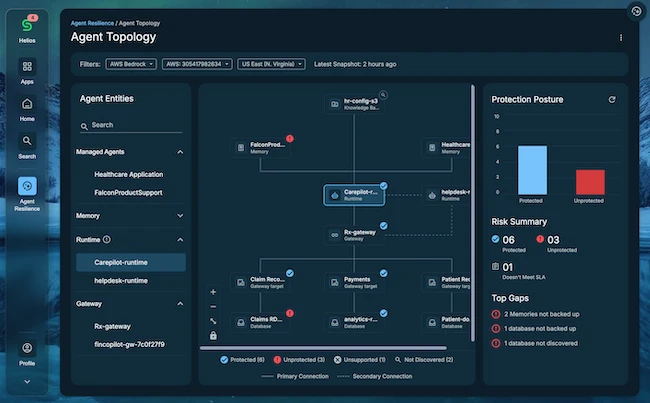
A unified view of an agent and the state it depends on. (Source: Cohesity)
Nozomi Compass helps industrial teams manage OT assets and vulnerabilities
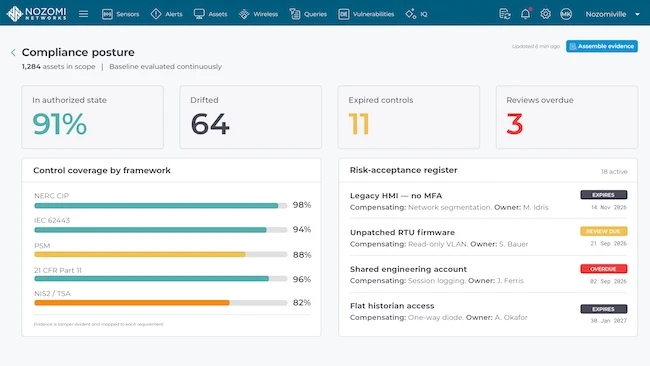
Nozomi Networks announced Nozomi Compass, an OT asset and service management platform designed to help organizations manage industrial assets, vulnerabilities, and exposures. The platform brings asset data, remediation workflows, and operational processes together, reducing reliance on spreadsheets, IT ticketing systems, and manual workflows that may not account for OT requirements.
Tuskira Vector brings autonomous red teaming to attack surface validation
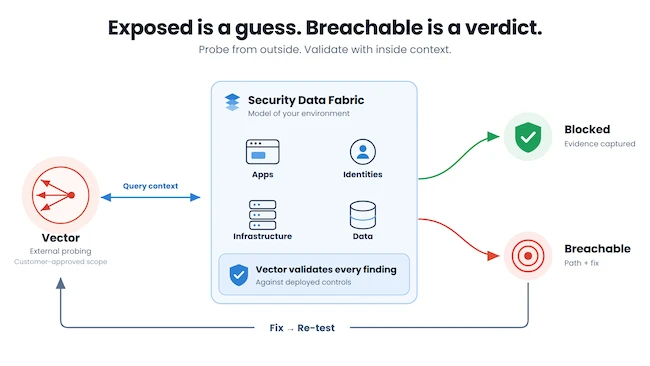
Tuskira has announced Vector, its autonomous red teaming agentic capability, which identifies an organization’s exploitable attack surface by simulating what an attacker can do from outside it.
Gurucul connects AI activity to identity data for faster threat response
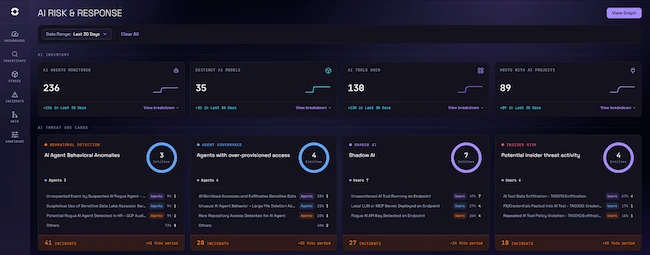
Gurucul has announced the general availability of Gurucul AI Risk and Response, bringing behavioral AI to the growing attack surface created as AI moves from assistant to actor. With hundreds of AI detections connecting activity to identity, access, data and broader security telemetry, the solution helps SOC and Insider Risk teams see who or what is acting, recognize threats as they develop, investigate the evidence and respond before risk escalates.
Cloud Range lets SOCs benchmark AI agents against human defenders
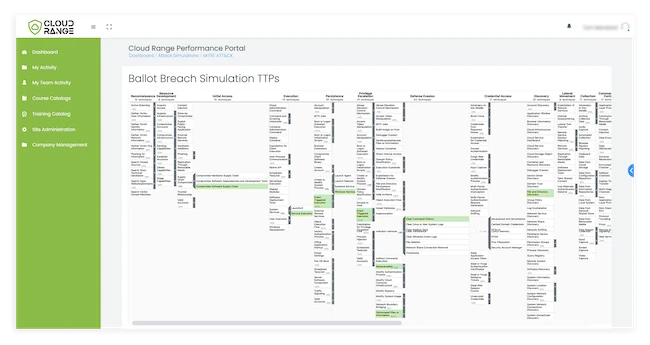
Cloud Range has announced the official launch of its AI Validation Range and Cloud Range AI Readiness Framework. They give organizations a structured way to test AI models and agents in realistic environments, validate their readiness for operational responsibility and safety, and determine which roles and tasks are best handled by AI versus human experts.